
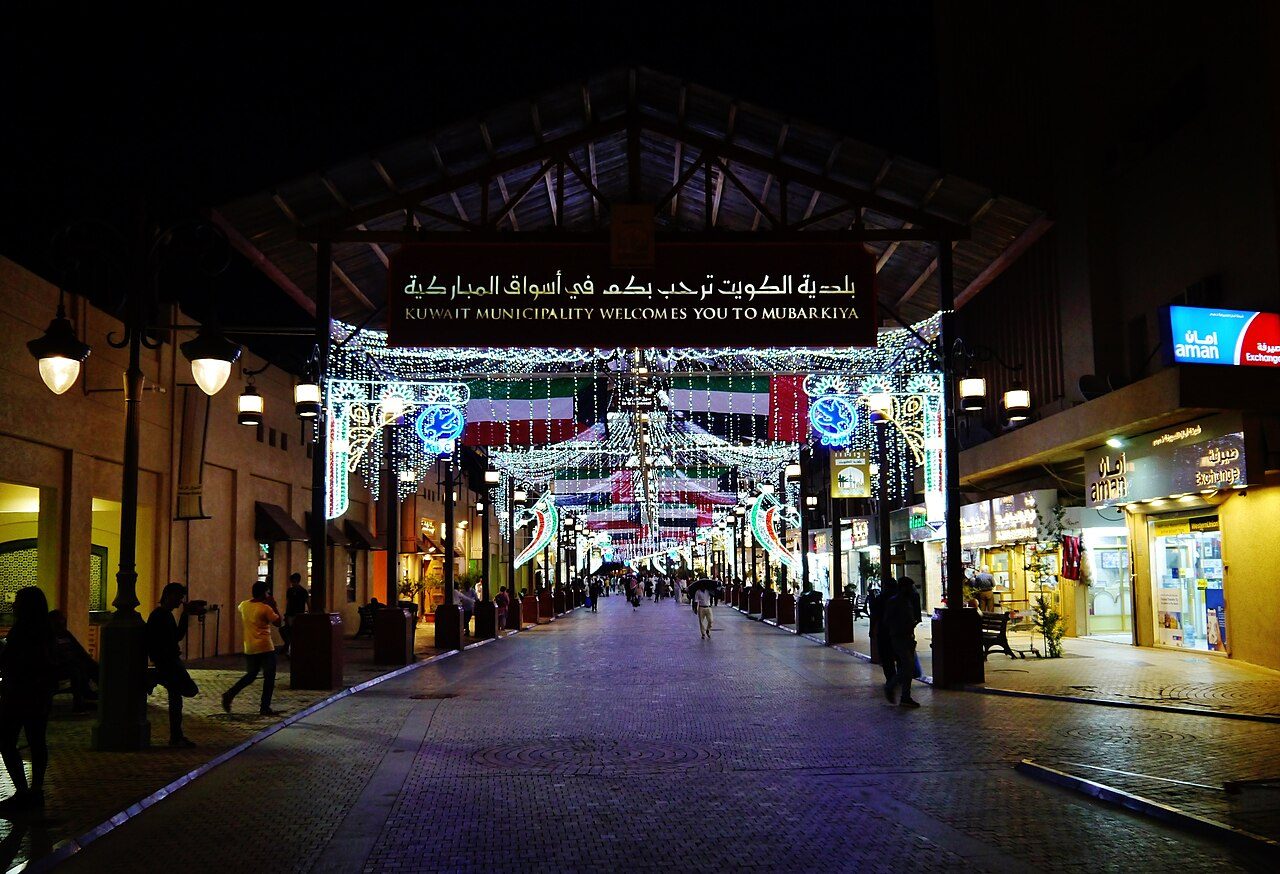
Souq Al-Mubarakiya
Established in 1897 under the reign of Sheikh Mubarak Al-Sabah, Souq Al-Mubarakiya preserves Kuwait’s pre-oil mercantile soul beneath a labyrinth of timber-beamed alleys. At its historic nexus stands Kishk Mubarak, a restored two-story pavilion where the ruler held court, received citizens, and adjudicated civic disputes in the early twentieth century. The architecture retains traditional Arabian Gulf vernacular: sun-shielded passages framed by whitewashed brick, open-air courtyards, and vaulted corridors braced with dark East African *chandal* (mangrove) beams and woven bamboo slats designed to mitigate the harsh desert heat. Wandering through its compartmentalized sectors, travelers encounter an unfiltered, multi-sensory slice of Kuwaiti heritage. Sacks of sun-dried black limes (*loomi*), Iranian saffron threads, and cracked cardamom pods spill into stone walkways, their aromas colliding with the sweet, resinous smoke of burning *oud* billowing from heritage perfumeries. Beyond stalls draped in vibrant Bedouin *sadu* textiles and gold jewelry, the market transitions into communal culinary courtyards. Here, patrons gather on low wooden benches cushioned in crimson carpets to drink spiced mint tea from tulip-shaped *istikanah* glasses while sampling skewers of charcoal-grilled lamb *tikka* and fresh flatbread baked against the walls of clay tandoor ovens.
More in Kuwait City
Photo credits (2)
- Zairon, CC BY 4.0, via Wikimedia Commons
- Francisco Anzola from United States, CC BY 2.0, via Wikimedia Commons