
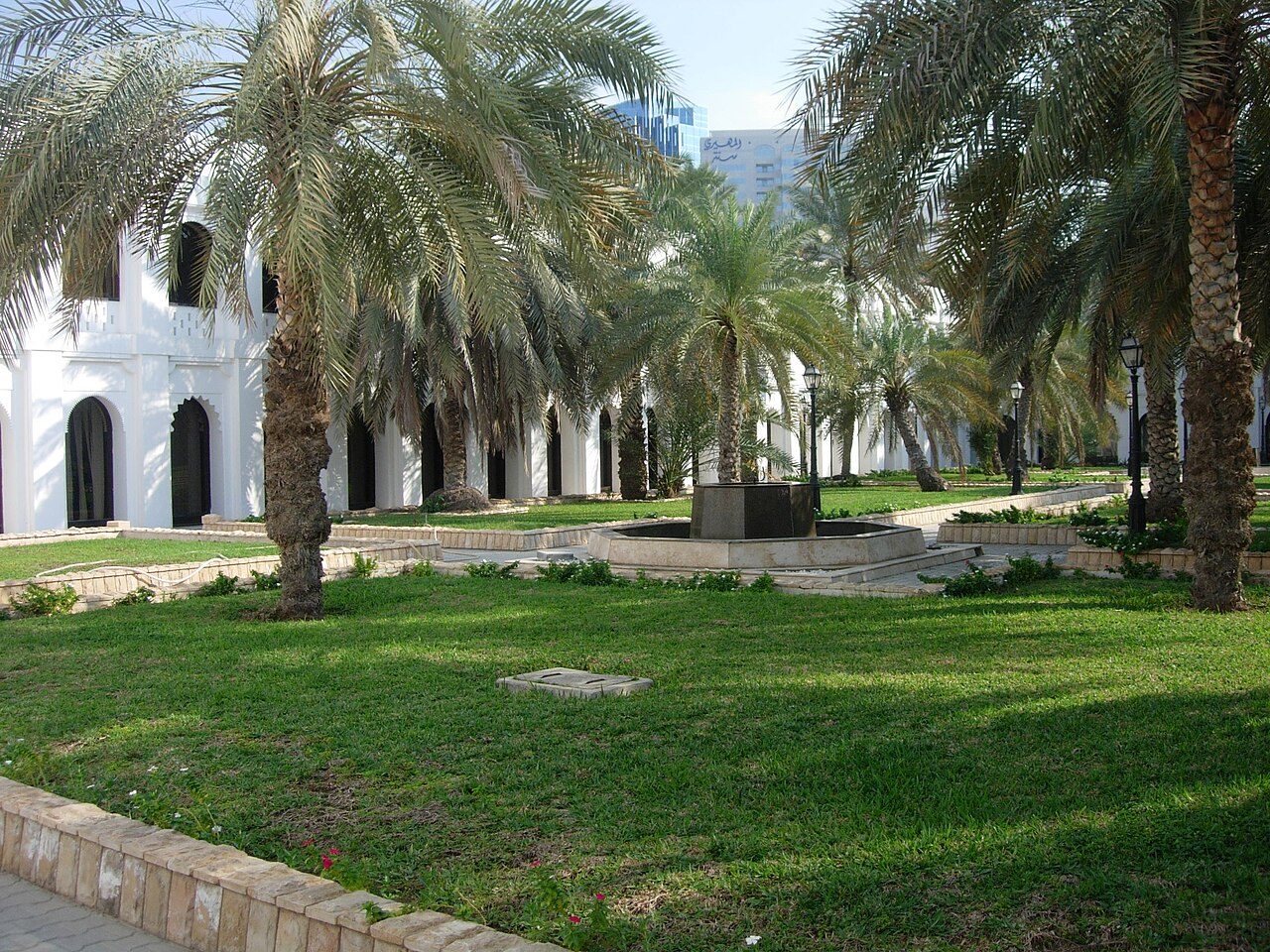
Qasr Al Hosn
Rising starkly against the glass monoliths of downtown Abu Dhabi, Qasr Al Hosn traces the transformation of the Emirates from a coastal pearl-diving settlement into a modern metropolis. Its origins date to 1761, when Sheikh Dhiyab bin Isa erected a solitary, cylindrical watchtower to protect the island’s sole freshwater spring. By the 1790s, his son, Sheikh Shakhbut bin Dhiyab, expanded the structure into a fortified stronghold, establishing it as the permanent ancestral seat of the ruling Al Nahyan dynasty. The fortress relies on regional vernacular masonry: thick blocks of coral and sea stone bound with a mortar of crushed shells and lime, roofed by mangrove poles. An outer, gleaming-white palace enveloped this original keep during the late 1930s, creating an architectural sanctuary that served as the nation's political nucleus until 1966. Crossing the threshold, visitors trade the rush of urban traffic for the reverent quietude of sun-baked courtyards. Standing within the central ward, you encounter the tactile, chalky grain of raw marine masonry, where fossilized shells remain embedded in the walls. Shaded colonnades and restored council chambers (*majlis*) display historic weapons, personal artifacts, and oral histories of desert life. From the battlements of the ancient watchtower, sightlines frame bleached crenelated parapets directly against the soaring steel and reflective glass of the modern capital, offering an immediate, physical juxtaposition of historic Bedouin resilience and 21st-century ambition.
More in Abu Dhabi

Photo credits (3)
- Myself, Public domain, via Wikimedia Commons
- Ramsey Mikati, CC BY-SA 4.0, via Wikimedia Commons
- EditQ, CC0, via Wikimedia Commons