
Troy
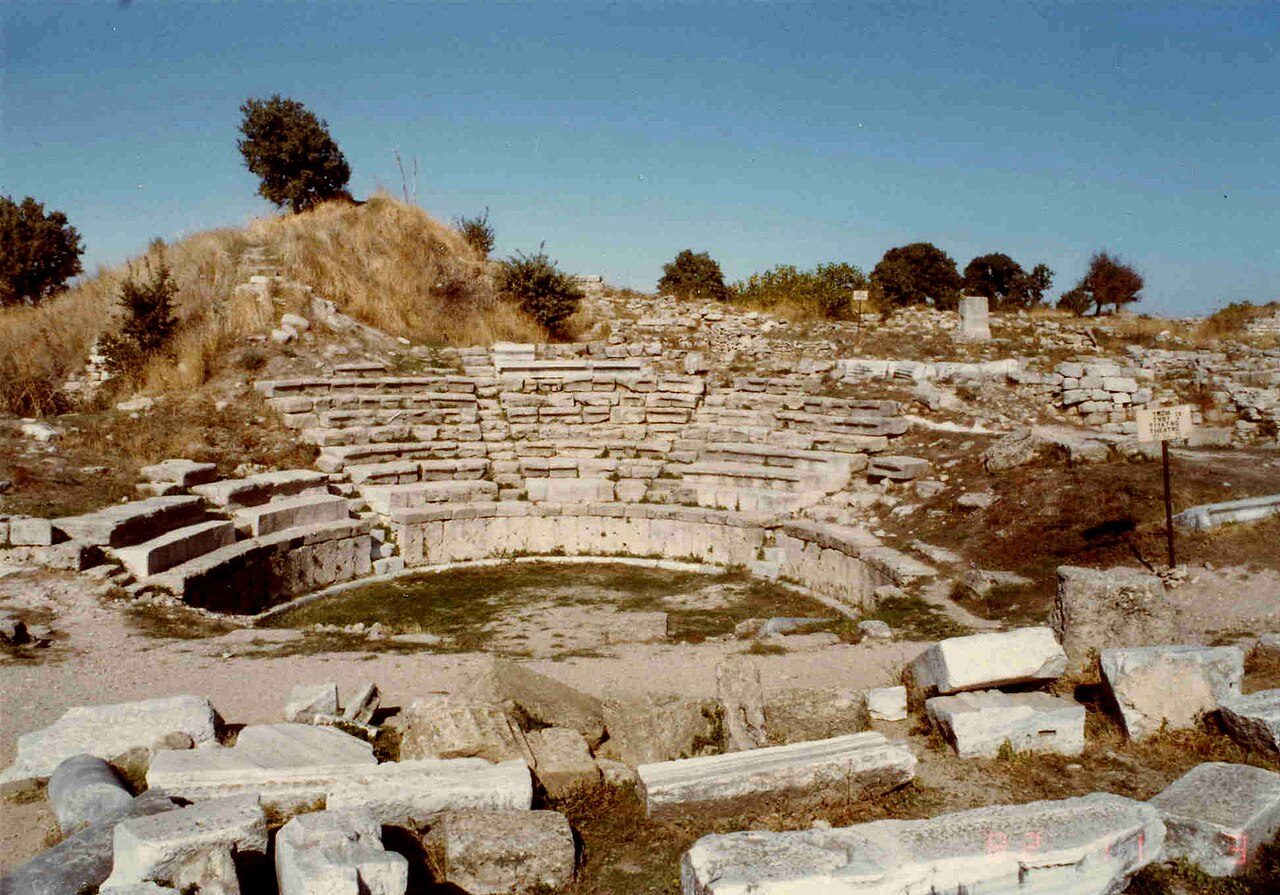
Rising above the wind-scoured Scamander plain near the mouth of the Dardanelles, the mound of Hisarlık conceals nine distinct architectural strata spanning from 3000 BCE to the Roman era. Rather than a singular mythic palace, the site reveals Heinrich Schliemann’s deep, destructive 1870s excavation trench cutting through millennia of human occupation. The most formidable remains belong to Troy VI and VII, the Late Bronze Age fortresses linked to Homer’s *Iliad* and King Priam. Here, monumental defensive ramparts rise at a deliberate, inward-sloping angle; their dressed limestone blocks, fit together with dry-stone cyclopean masonry, were engineered to deflect both Achaean battering rams and the seismic jolts of the Anatolian fault. Ascending the preserved flagstone ramp of Troy II—paved around 2500 BCE—you step onto smooth, sun-bleached stones once crossed by Early Bronze Age merchants and warriors. A fierce, relentless gale constantly whips off the nearby Aegean, carrying the scent of dry earth and wild thyme across the exposed citadel. Glancing down into the excavated pits, you can clearly trace the dark, ash-choked strata lines testifying to the catastrophic fires that collapsed ancient timber-and-mudbrick megaron halls. Amid ruined foundations and the pale marble curve of an unroofed Roman bouleuterion, the boundary between epic poetry and tactile archaeology sharply dissolves.
More in Canakkale
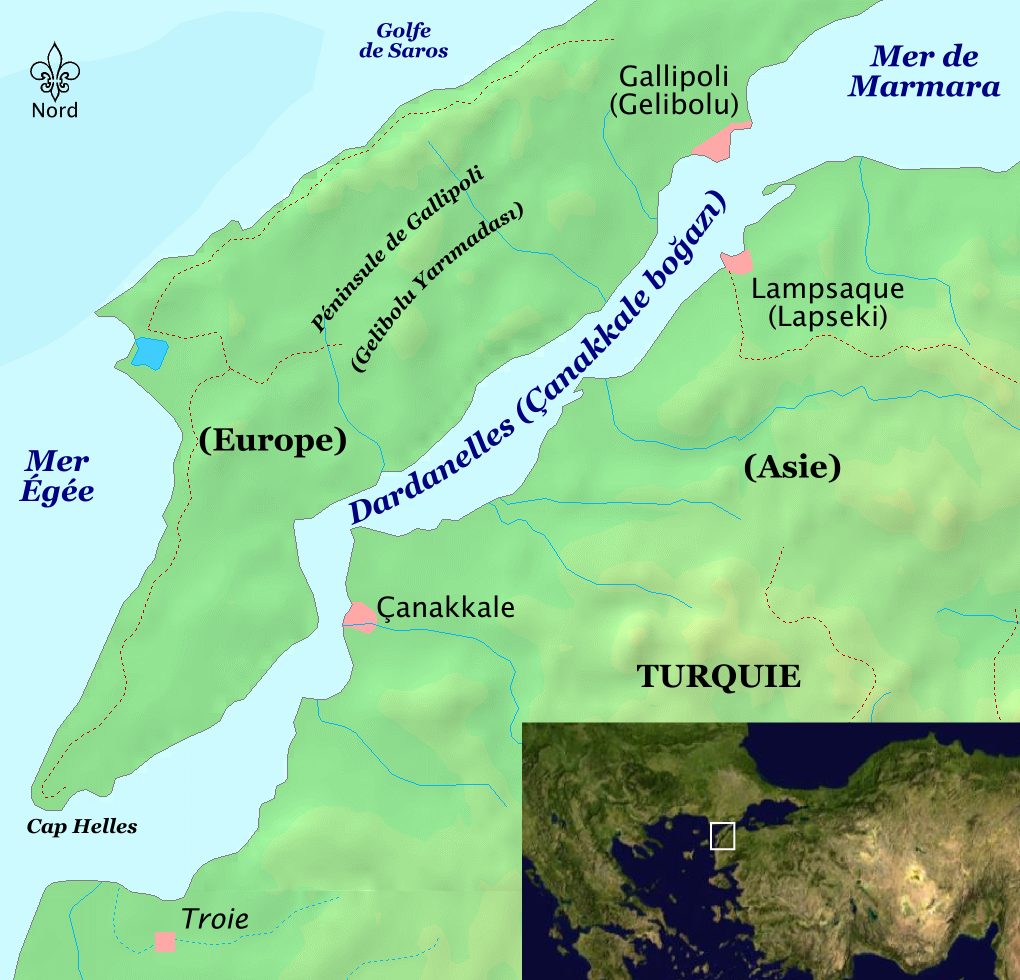
Photo credits (2)
- Brian Harrington Spier, CC BY-SA 2.0, via Wikimedia Commons
- Idarvol at French Wikipedia, Public domain, via Wikimedia Commons