

Altiaghaj National Park
Anchored along an ancient caravan artery, Altiaghaj traces its identity to medieval routes that branched out from the Shirvanshah seat of Shamakhi. The name itself preserves an archaic Persian-Turkic distance metric—the *aghaj*, spanning roughly seven kilometers—marking the six-stage trek (approximately 42 kilometers) that horse-mounted merchants traversed toward the Caspian Sea. Formally designated as a national park in August 2004 over the foundation of a 1990 Soviet-era nature reserve, this 11,000-hectare sanctuary was created to safeguard the fragile transitional biome where the sun-bleached hills of the Gobustan steppe collide with the dense, emerald slopes of the Greater Caucasus. Ascending into the park, the dry air yields to the damp, resinous scent of crushed wild juniper and rich loam. Hikers traverse ridges cloaked in ancient broadleaf canopies of Caucasian hornbeam, Oriental beech, and Iberian oak, interspersed with wild apple and hawthorn thickets. Below, the Atachay River carves through deep limestone ravines, its rushing waters set against striking sedimentary slopes banded in chalky white and rust-red clay. Standing along the high ridge trails, visitors look out over undulating forested folds where the rustle of undergrowth often betrays a darting roe deer or wild boar, while imperial eagles ride the updrafts over the park’s dedicated wild animal rehabilitation center nestled in the valley.
More in Shamakhi
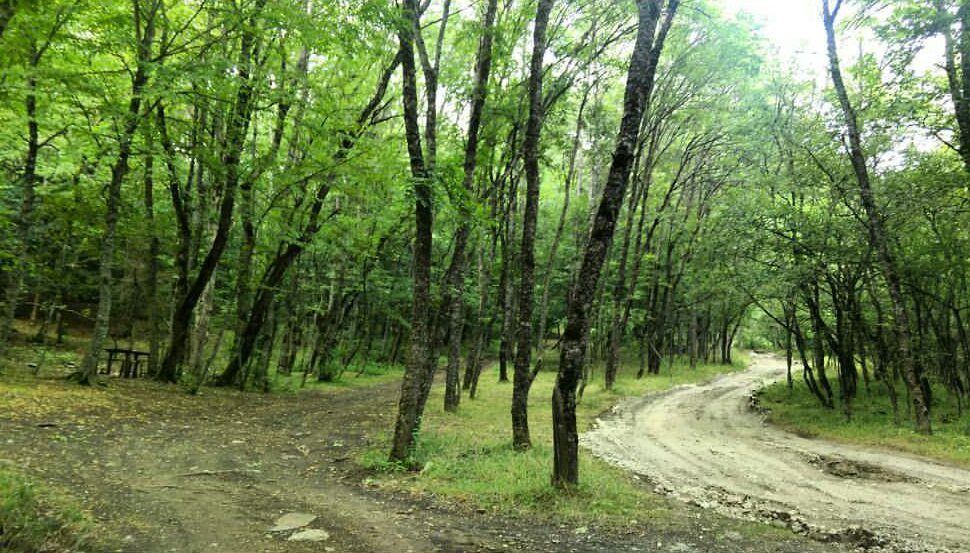
Photo credits (3)
- Shahin Shahbaz, CC BY-SA 3.0, via Wikimedia Commons
- Interfase, CC BY-SA 4.0, via Wikimedia Commons
- Aytanbabakishiyeva, CC BY-SA 4.0, via Wikimedia Commons