
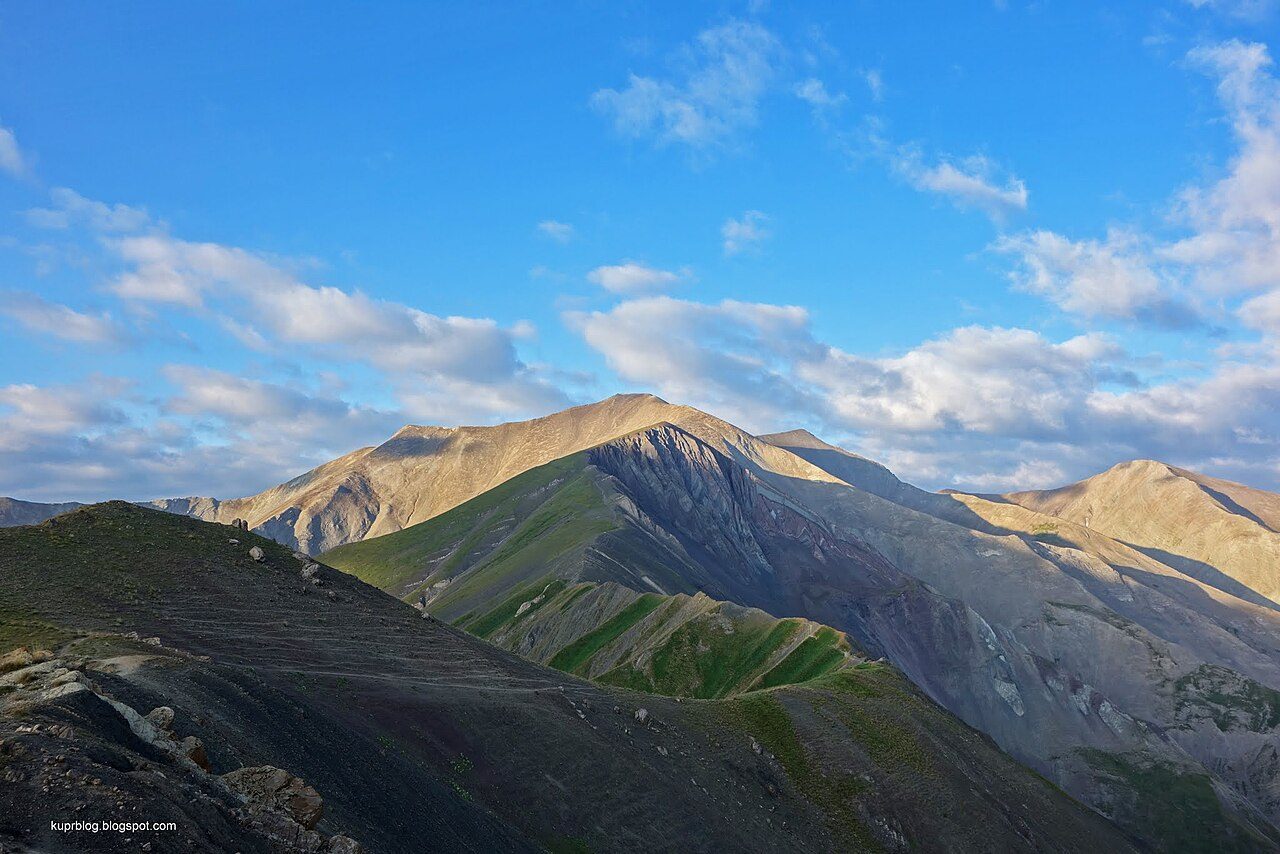
Babadag Mountain
Rising to 3,629 meters in the eastern Greater Caucasus, the jagged, slate-crag summit of Babadag—"Grandfather Mountain"—has commanded spiritual reverence across northeastern Azerbaijan since the Middle Ages. Rooted in ancient high-altitude veneration and later sanctified by regional Sufi traditions, the mountain is renowned as the hermitage of Hazrat Baba, a revered medieval ascetic whose rustic stone tomb crowns the apex. Each summer between July and September, pilgrims navigate arduous equestrian tracks from remote craft villages like Lahij, transforming the mountain’s austere shale ridges into an active pilgrimage corridor steeped in centuries of Caucasian folk devotion. At the wind-whipped crest, the landscape shifts from alpine pastures to a stark world of charcoal-gray scree fields and vertiginous rock escarpments. Travelers encounter clusters of sacred stone cairns, or *obas*, densely wrapped in vibrant strips of fabric that flutter violently against gale-force drafts. Standing beside the unadorned, dry-stone shrine at the peak, one experiences the biting bite of thin, oxygen-sparse air and hears the rhythmic snapping of prayer ribbons cutting through the silence. Below, an unobstructed 360-degree panorama unfurls across rolling sea-bound ridges and deep cloud-filled ravines, offering a raw, solitary encounter with the Caucasus at its most elemental.
More in Ismayilli

Photo credits (2)
- Kupr31, CC BY-SA 4.0, via Wikimedia Commons
- Asif Masimov (masimovasif.net), CC BY-SA 4.0, via Wikimedia Commons