
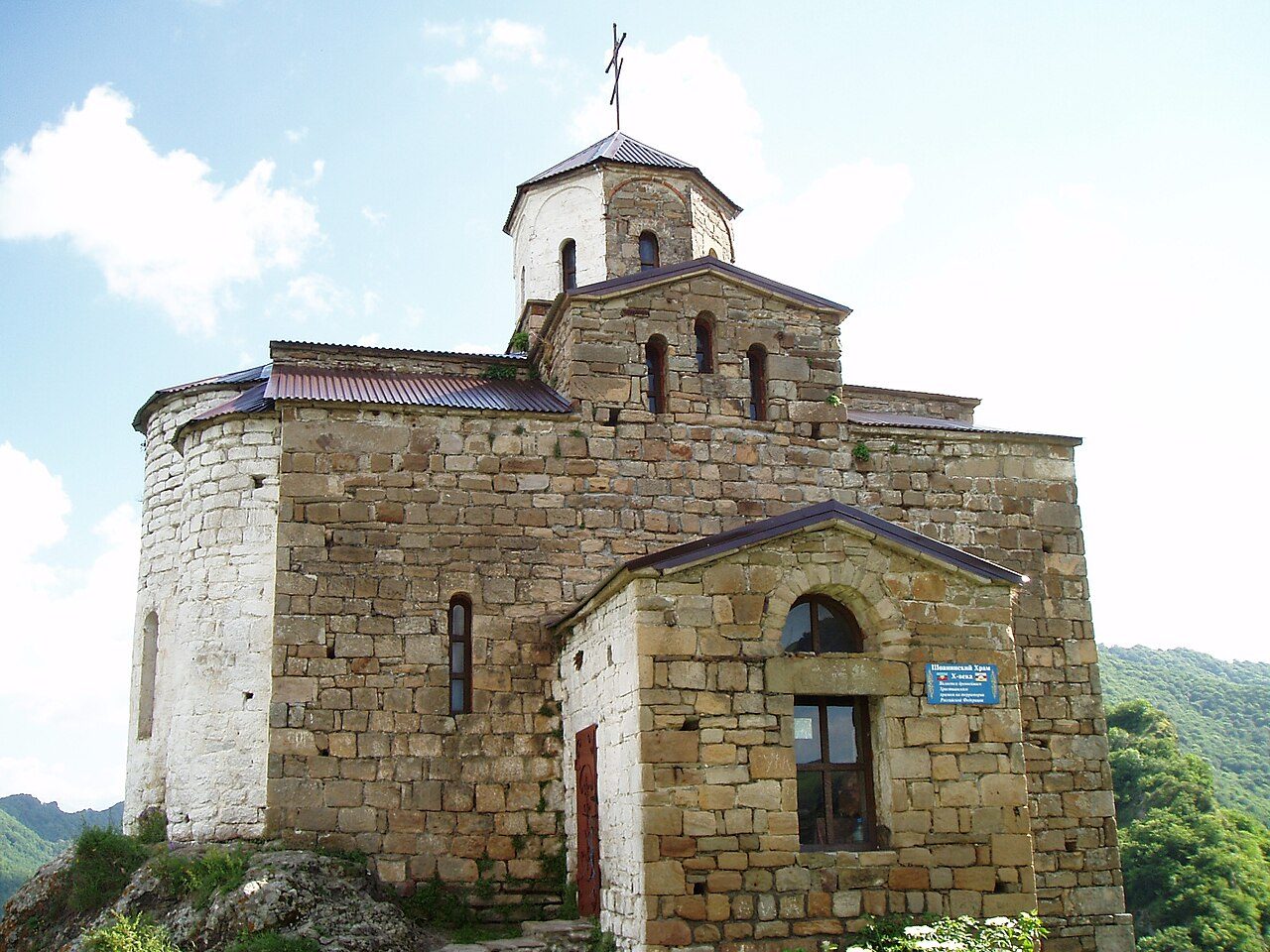
Shoana Church
Perched dramatically on the jagged spur of Mount Shoana above the Kuban River gorge, this tenth-century sanctuary stands as an extraordinary relic of early Caucasian Christianity. Erected around the late 900s during the zenith of the medieval Kingdom of Alania, the church embodies a provincial adaptation of Byzantine cross-in-square architecture. Master masons assembled its compact frame using rough-hewn sandstone blocks bound with lime mortar, culminating in three projecting semicircular apses, steep gables, and an octagonal drum capped by a low conical dome. Its commanding position atop the cliff was both spiritual and strategic, surveying the Silk Road branch that once snaked through the North Caucasus. Stepping through the arched threshold, travelers encounter a stark, shadow-draped interior where daylight filters through narrow slit windows. Although a controversial nineteenth-century renovation by local Cossack communities masked much of the original artwork, keen eyes can still discern faded fragments of medieval frescoes alongside ancient Alanian *tamgas* (clan marks) and centuries of Greek, Arabic, and Russian graffiti scored into the stone. Standing on the sheer promontory beside the rustic open-air bell tower, visitors feel the relentless mountain wind whip up from the valley, accompanied by sweeping, vertigo-inducing panoramas of the forested ridges rolling toward the high Caucasus.