
Zadar
Tucked onto a narrow limestone peninsula along northern Dalmatia, Zadar faces the Adriatic Sea with the jagged ridge of the Velebit mountains looming to the north. Walking the ancient grid feels unhurried, as sea breezes drift across flagstones polished smooth by centuries of footsteps. First settled by Liburnians and made a Roman colony in the first century BC, the city layers deep history into a compact core. At its heart lie the stone pillars of the Roman Forum, flanked by the cylindrical Church of Saint Donatus, a ninth-century monument built using salvaged Roman masonry. Along the western promenade, the submerged pipes of the Sea Organ transform crashing waves into resonant musical chords, while the neighboring Greeting to the Sun turns twilight into a subtle display of light. Everyday life gathers around the morning green market near the Venetian city walls, where tables fill with wheels of Pag cheese, local olive oil, and fresh mackerel. In the evening, residents take part in the đir, a slow seaside stroll along the Riva that often concludes with a glass of Maraschino, a cherry liqueur distilled here since the sixteenth century. Late July brings the Night of the Full Moon festival, when street lamps are doused and the waterfront glows with lanterns and sardine grills. The Old Town is entirely pedestrian and can be crossed in fifteen minutes. Visit in May, June, or September for mild weather and calm seas without midsummer ferry crowds.
Read more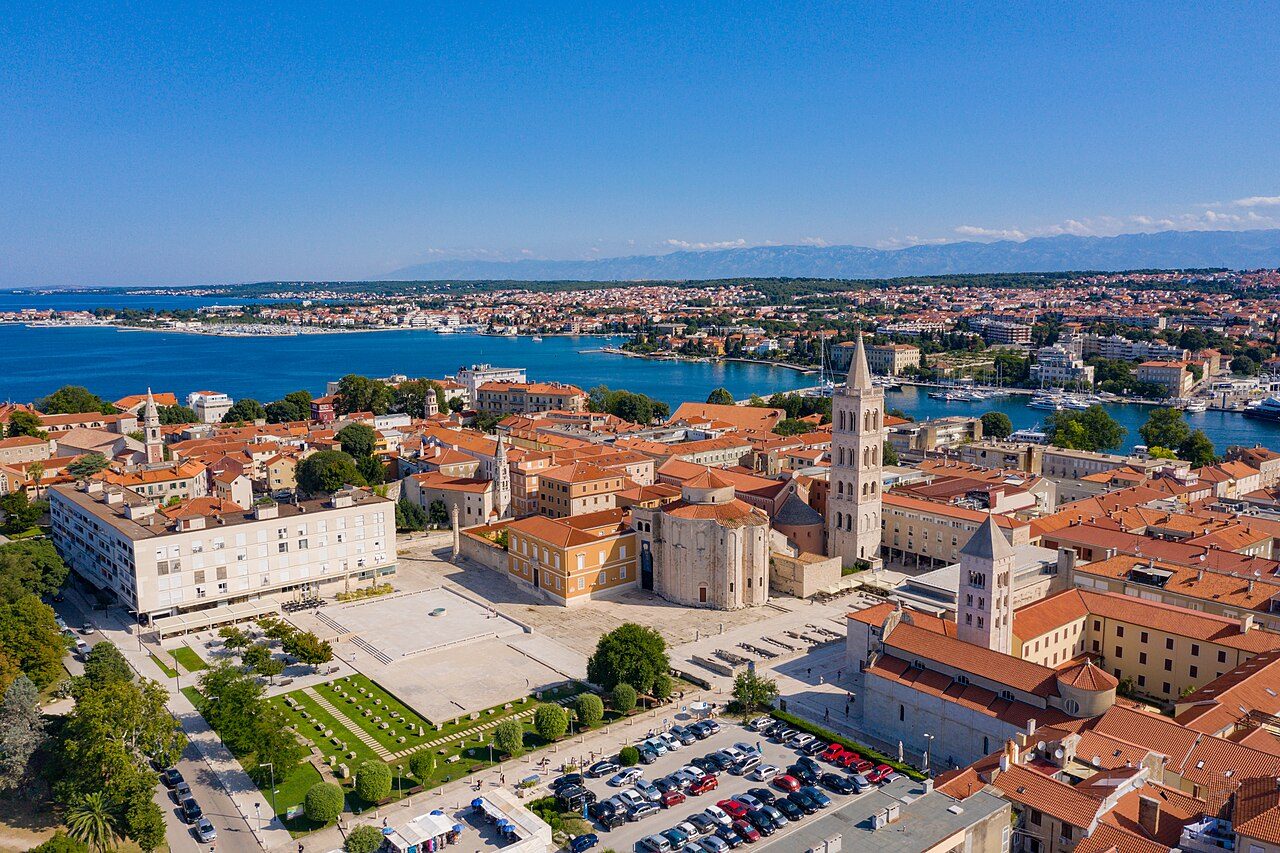
What to see in Zadar
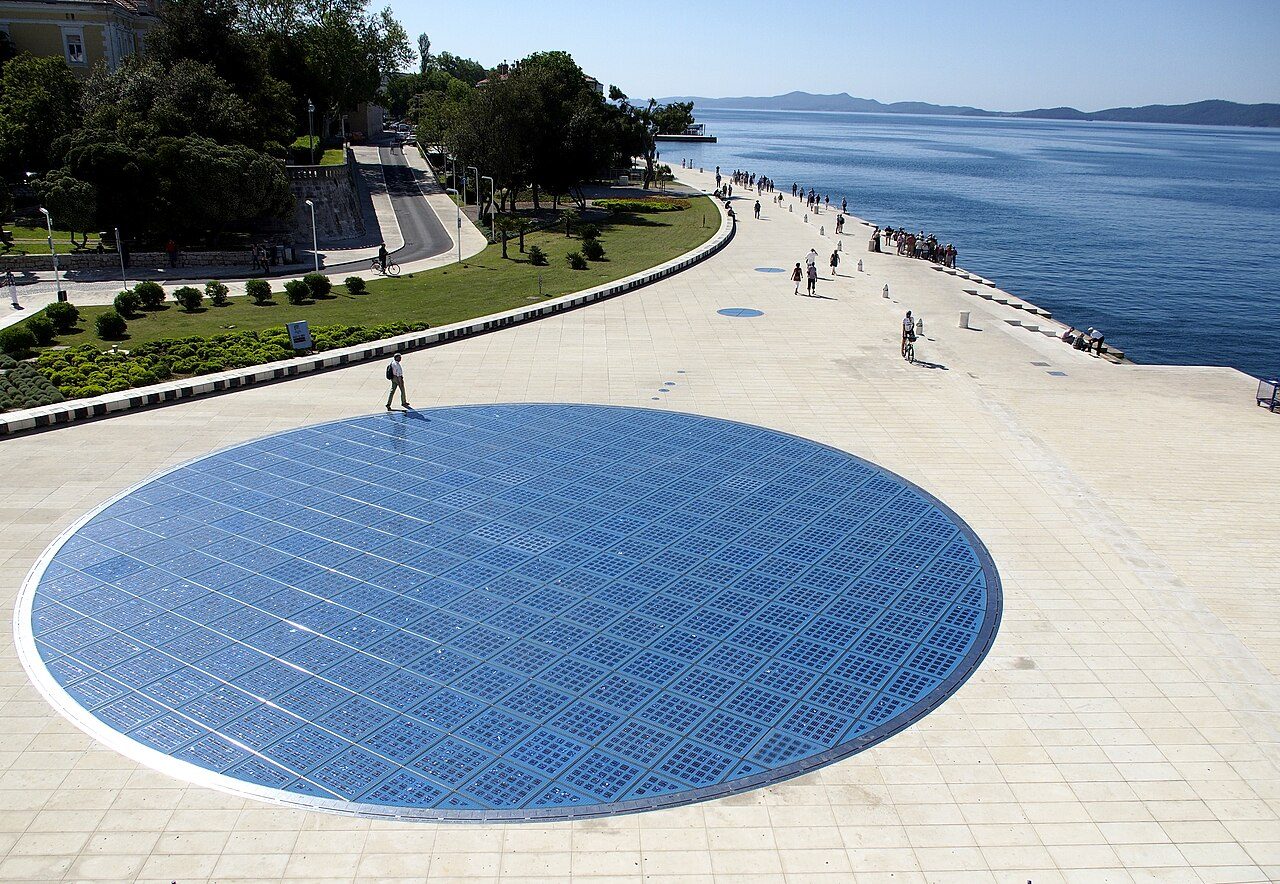
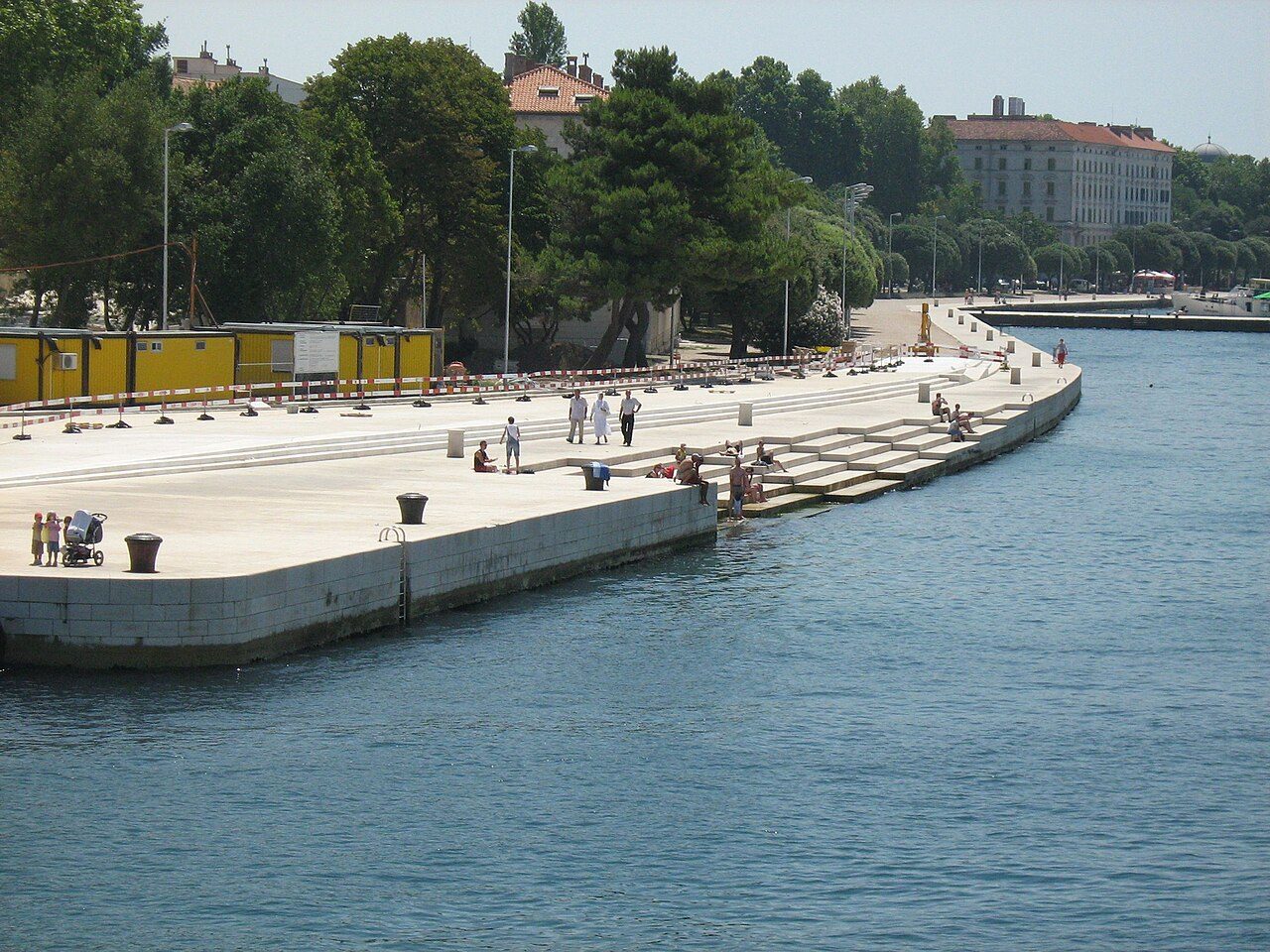
Photo credits (3)
- dronepicr, CC BY 2.0, via Wikimedia Commons
- Hajotthu, CC BY-SA 3.0, via Wikimedia Commons
- Andrej Šalov, CC BY-SA 3.0, via Wikimedia Commons