Vladikavkaz
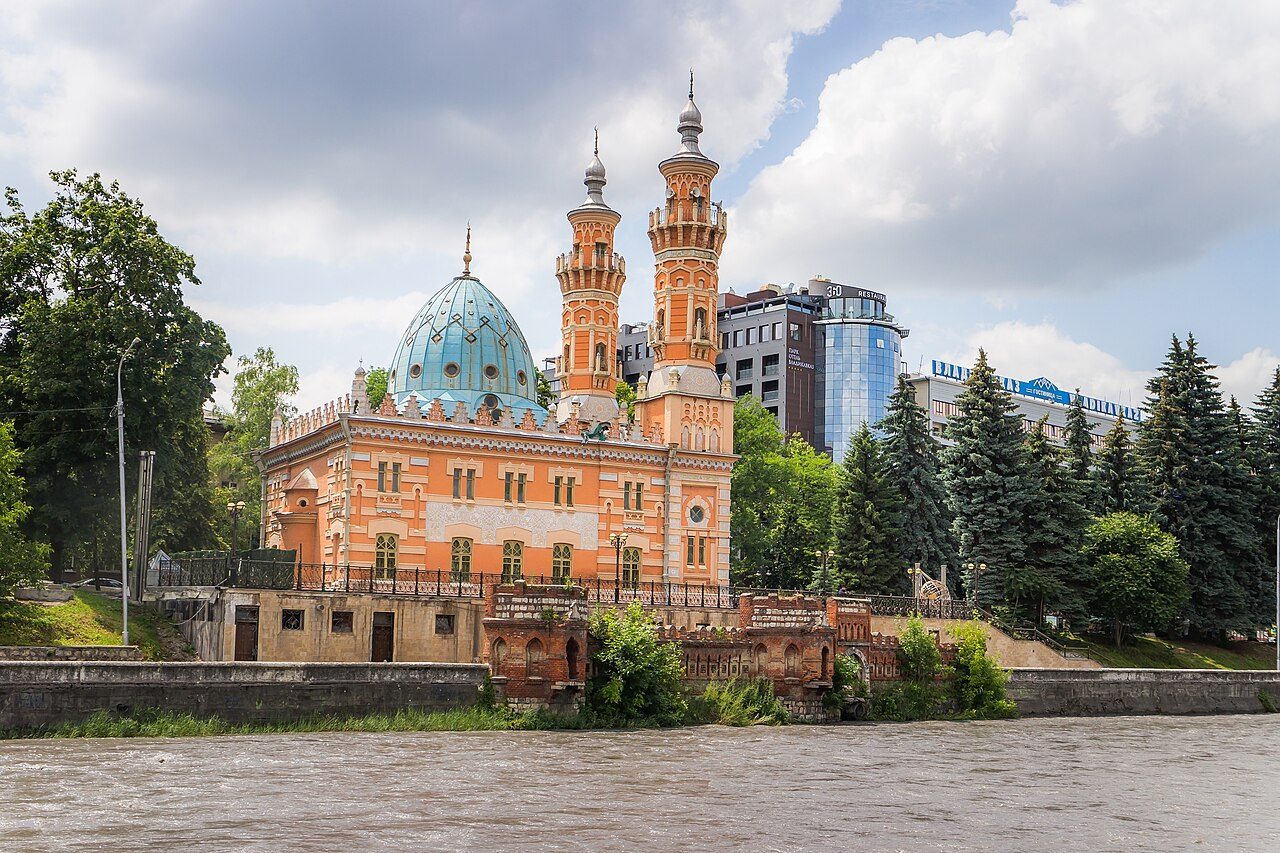
Vladikavkaz sits in the southern Russian republic of North Ossetia-Alania, straddling the rushing gray waters of the Terek River right where the flat steppe collides with the Great Caucasus. Walking its streets feels stately yet rugged; snow-dusted peaks, notably the flat crest of Mount Stolovaya, loom directly over the low-rise skyline. The heart of town centers on Prospekt Mira, a pedestrian boulevard shaded by century-old linden trees where vintage trams clatter past turn-of-the-century merchant facades. Founded in 1784 under Catherine the Great as an imperial outpost guarding the Georgian Military Road, the city quickly grew into a multicultural mountain hub. Along the riverbank stands the Mukhtarov Mosque, built in 1908 in an ornate Egyptian-Mamluk style with pale limestone and azure accents, framed sharply against alpine ridges. Nearby, the Art Nouveau mansions of the Russian merchant quarter house the Tuganov Art Museum, while the whitewashed Church of the Nativity of the Blessed Virgin Mary anchors the older Ossetian settlement on the hillside. Life here is anchored by Ossetian hospitality and the ritual of Ossetian pies—thin, yeast-leavened rounds filled with sharp melted cheese, beet leaves, or spiced beef, ritually served in stacks of three symbolizing sun, water, and earth. For regional cheeses, mountain honey, and fresh herbs, visit the bustling Central Market. Early autumn offers the clearest skies and mildest weather for sightseeing, and the central core is best navigated on foot or via the historic tram line across the river.
Read more