Vigan
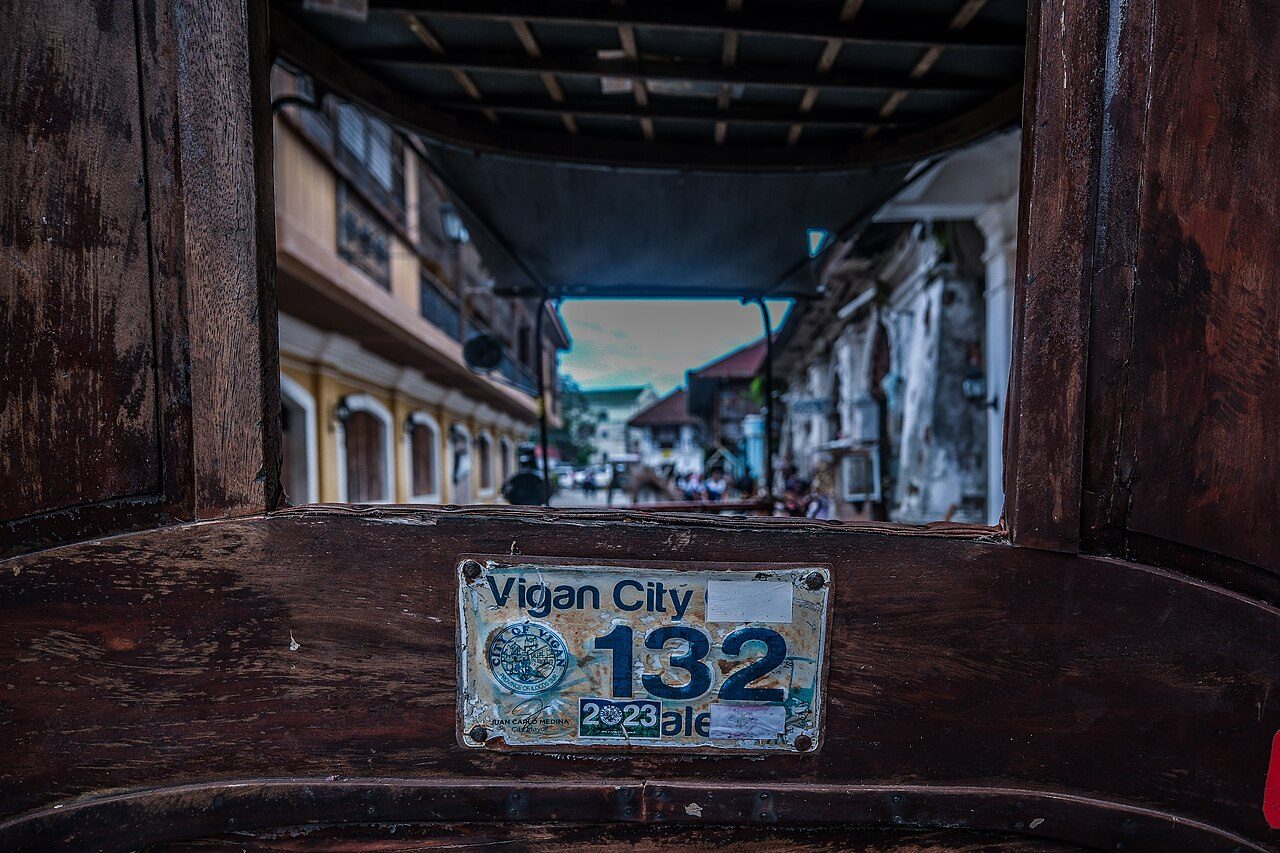
Resting on the coastal plains of Ilocos Sur between the South China Sea and the Cordillera mountains, Vigan sits along the Abra River delta. Walking its stone grid feels like stepping into a preserved frontier settlement of timber and brick. Horse-drawn carriages, called kalesas, rattle across the cobblestones past ancestral homes where sliding capiz-shell windows catch the afternoon sea breeze. Established in 1572 by Juan de Salcedo, the town became a major trading post linking Asia and the Americas. Along pedestrianized Calle Crisologo, eighteenth-century mansions combine Chinese craftsmanship with Spanish design. Nearby stands Saint Paul’s Cathedral, built in 1800 in the earthquake-baroque style to survive tremors. Just north in Bantay, a 1591 brick watchtower overlooks the coastal fields, while the Pagburnayan quarter still houses traditional earthen kilns where artisans turn dark burnay clay jars on foot-powered wheels. Street stalls around Plaza Burgos draw crowds each evening for crisp, orange Vigan empanadas stuffed with grated green papaya and garlicky longganisa sausage. Every May, the Viva Vigan Festival brings street dancers and loom weavers onto the plazas to celebrate Ilocano craft traditions. Visit between November and February during the cooler dry months. The historic core is best explored on foot at sunrise before daytime heat sets in, while a modest tricycle or kalesa easily reaches outlying pottery workshops.
Read more