Shakhrisabz
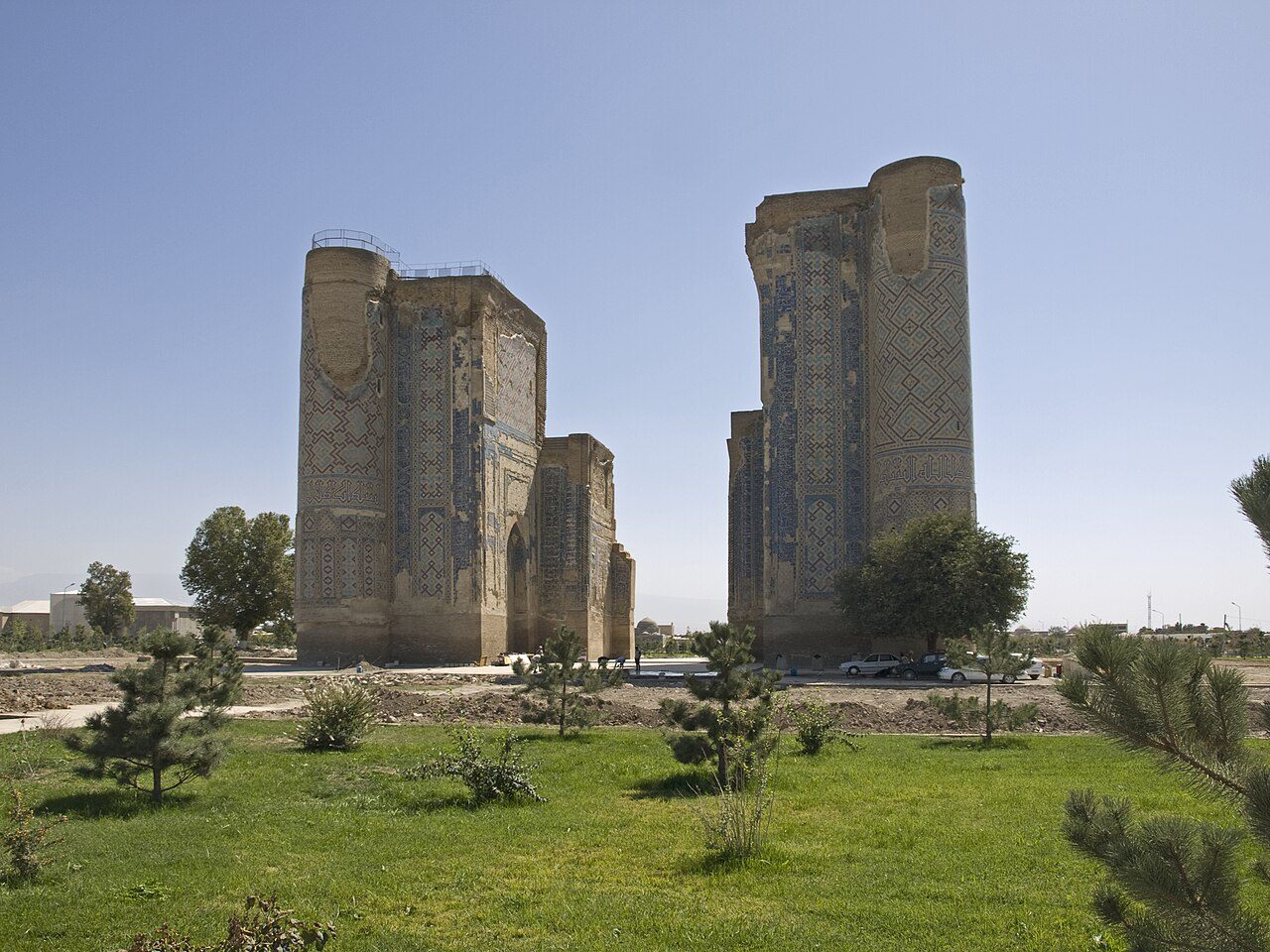
Nestled in the lush Kashkadarya basin against the craggy foothills of the Zarafshan Range, Shakhrisabz lives up to its Persian name meaning the green city. Walking its core feels pleasantly unhurried compared to neighboring Samarkand. Wide gardens and quiet avenues are shaded by mulberry trees, and residential mahallas border open plazas where elders in embroidered tubeteika caps rest on wooden tapchans. The town owes its monumental heritage to Amir Timur, who was born nearby in 1336 and transformed his ancestral seat into a dynastic showcase. The towering brick pylons of the Ak-Saray Palace, commissioned in 1380, remain the central marvel, covered in surviving bands of turquoise, cobalt, and gold tiles. A short walk south brings you to the Dorut Tilavat complex, anchored by the Kok Gumbaz Friday mosque built in 1437 by Timur’s astronomer grandson Ulugbek. Across the park at the Dorus Saodat ensemble lies the vaulted marble crypt built to hold Timur, an austere underground chamber that sits empty because winter snows diverted his burial to Samarkand. Local life thrives around the Chorsu market and surrounding tea-houses, famous across Uzbekistan for tandir gosht, tender mutton slow-roasted in subterranean clay ovens over burning mountain juniper. During the spring festival of Navruz, the town squares fill with wedding processions and bubbling cauldrons of sprouted-wheat sumalak. The best approach is by shared taxi over the scenic Takhta-Karacha Pass from Samarkand; arrive in early morning or late afternoon to explore the compact historic zone entirely on foot in cooler air.
Read more