
Rovinj
Perched on a teardrop peninsula along the western coast of the Istrian peninsula, Rovinj rises directly from the blue waters of the northern Adriatic Sea. Polished limestone alleys wind upward like a labyrinth, worn glossy by centuries of footsteps. Walking through the historic center means navigating narrow passages flanked by tall, pastel shuttered facades, ducking beneath laundry strung between stone walls, and catching sudden views of open water framed by descending stairwells. Originally an offshore island, Rovinj was physically joined to the mainland in 1763 when the shallow channel was filled. Over five centuries of Venetian rule left an indelible mark on the townscape, exemplified by Balbi’s Arch, constructed in 1679 at the entrance to the old quarter. From there, the cobblestone corridor of Grisia climbs past resident artists and galleries toward the hilltop Church of Saint Euphemia, completed in 1736. Its soaring bell tower, deliberately modeled after Saint Mark’s in Venice, holds the marble sarcophagus of the third-century martyr. Along the harbor below, the Batana Eco-Museum documents the traditional flat-bottomed wooden boats that local fishermen still row out at dawn. Daily life revolves around the open-air market near the harbor, where vendors sell Istrian truffles, cold-pressed olive oils, and wild asparagus alongside crates of fresh sardines. On September sixteenth, the town honors Saint Euphemia with traditional music and communal feasts of brodet fish stew paired with local Malvazija wine. The historical core is entirely pedestrian, so sturdy rubber-soled footwear is necessary to grip the slippery flagstones. Visiting during May or September avoids the dense midsummer heat while keeping the sea warm enough for swimming.
Read more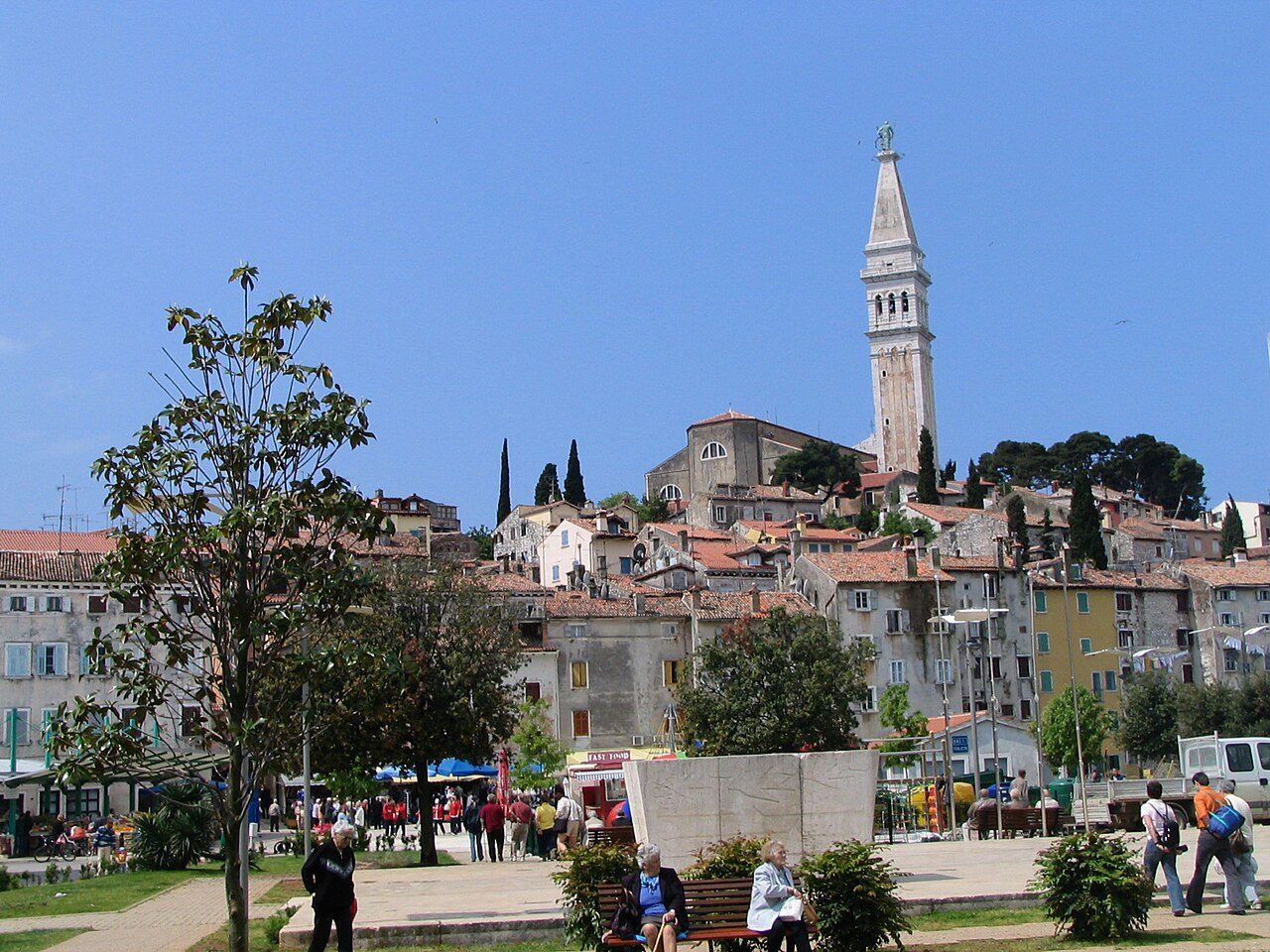
What to see in Rovinj
Photo credits (1)
- No machine-readable author provided. Andres rus assumed (based on copyright claims)., CC BY-SA 3.0, via Wikimedia Commons