Puerto Madryn
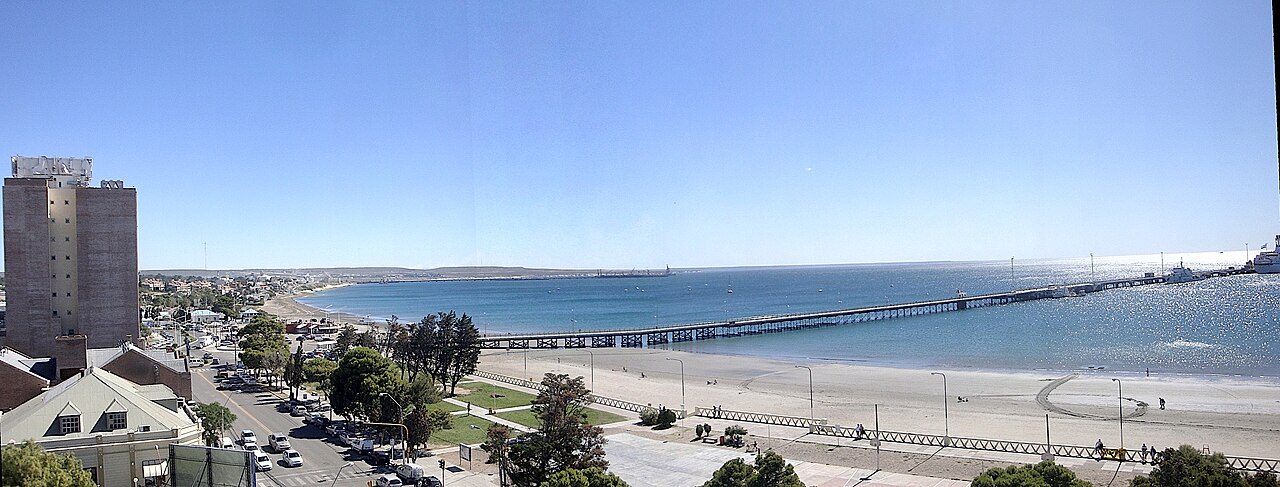
Perched along the deep blue arc of the Golfo Nuevo in northern Patagonia, Puerto Madryn faces the cold Atlantic with a salty, wind-scoured ease. The desert steppe rolls directly down to broad gravel and sand beaches, where low-rise brick buildings line Avenida Julio Argentino Roca. Walking the wide coastal promenade, you hear the steady lap of the tides and the calls of kelp gulls, carried by a brisk southern wind that keeps the sea air remarkably sharp. The town began in July 1865, when 153 Welsh settlers disembarked from the clipper Mimosa at Punta Cuevas to establish an agricultural colony. Today, you can inspect the primitive hollows in the sandstone where those families sheltered, marked nearby by the bronze Monumento al Indio Tehuelche honoring the native people who aided them. Farther south along the coast, the clifftop Ecocentro interprets the offshore ecosystems of the southern oceans through art and acoustic exhibits, while the long Luis Piedra Buena pier extends into the bay, allowing walkers to watch southern right whales surface in the shallows. Daily life revolves around the water, and local cantinas serve platters of wild Patagonian shrimp, octopus, and spider crab, often accompanied by dense Welsh black cake passed down from early valley bakeries. In early summer, the Fiesta Nacional del Cordero brings the community together around open-pit lamb roasts and folk music. The most rewarding months to visit run from September to November, when whale activity overlaps with penguin nesting season. The city center is easily navigated on foot or by bicycle, though hiring a sturdy car is essential for exploring the gravel roads leading across the Valdes Peninsula.
Read more