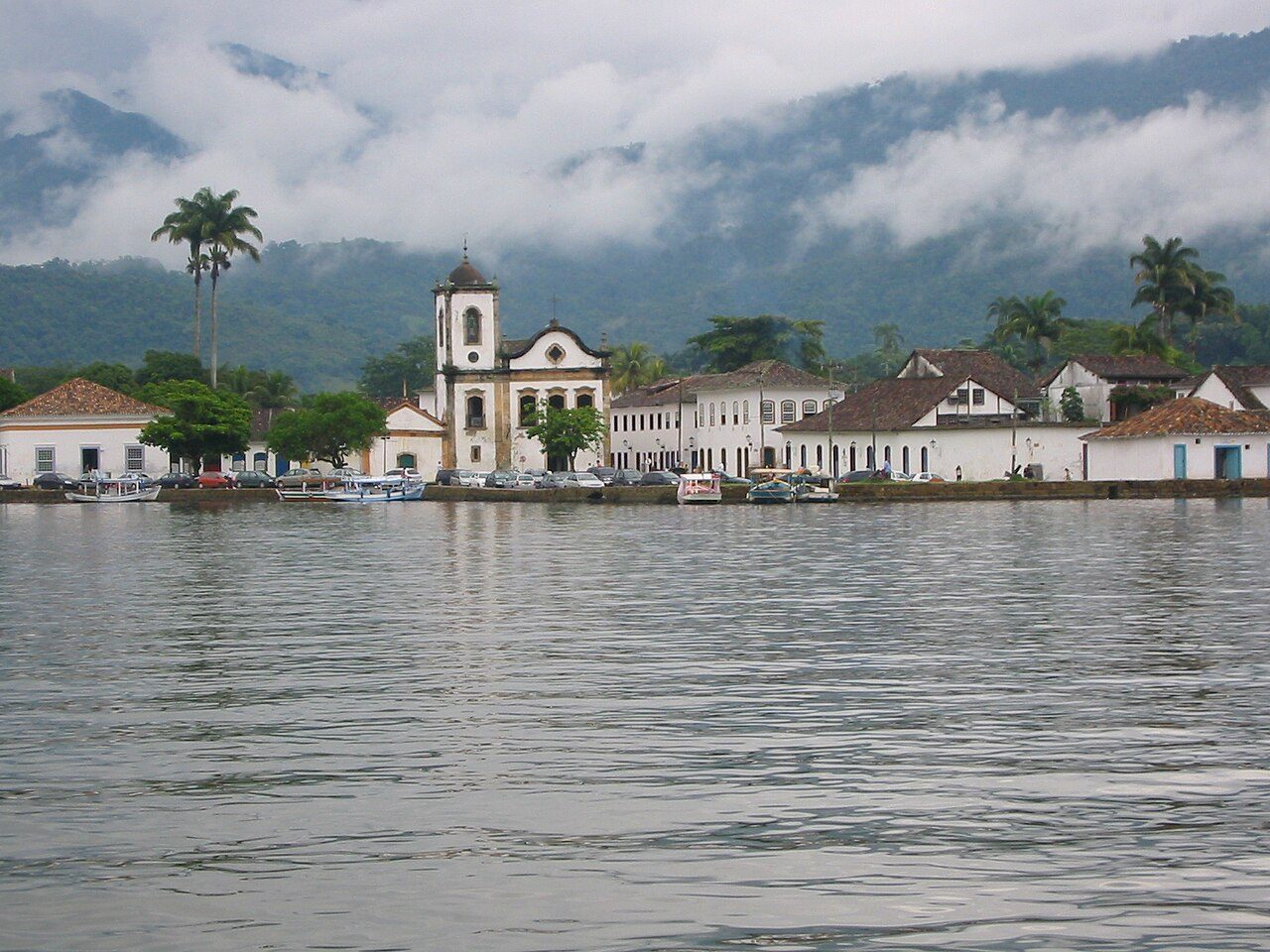
Paraty
Tucked along Rio de Janeiro’s Costa Verde, Paraty rests on a coastal flat where the forested Serra da Bocaina drops into the Atlantic, flanked by the Perequê-Açu River. In the pedestrian historic center, whitewashed colonial buildings line lanes paved in uneven pé-de-moleque stones. At monthly high tides, seawater deliberately spills through carved street channels, cleansing the stone paths and turning the avenues into reflective canals. Established by Portuguese settlers in 1667, the town served as the primary Atlantic export port for inland gold along the Caminho do Ouro. This era survives in preserved landmarks: the 1722 waterfront church of Santa Rita, built by freed Afro-Brazilians; the hilltop Forte Defensor Perpêtuo, completed in 1822 to guard the anchorage; and the Casa da Cultura, which documents indigenous and coastal Caiçara traditions in an eighteenth-century mansion. Life revolves around the harbor, where wooden skiffs land fresh catches for dishes like camarão casadinho, local shrimp stuffed with manioc flour and herbs, paired with artisanal spirits from surrounding sugarcane stills. Cultural rhythms peak during the winter FLIP international literary festival and August’s Festival da Cachaça. For practical travel, wear sturdy flat shoes to navigate the slick, irregular stones, explore early in the morning before the tropical heat builds, and hire a traditional wooden schooner from the pier to reach the secluded beaches of Saco do Mamanguá.
Read more