Olympia
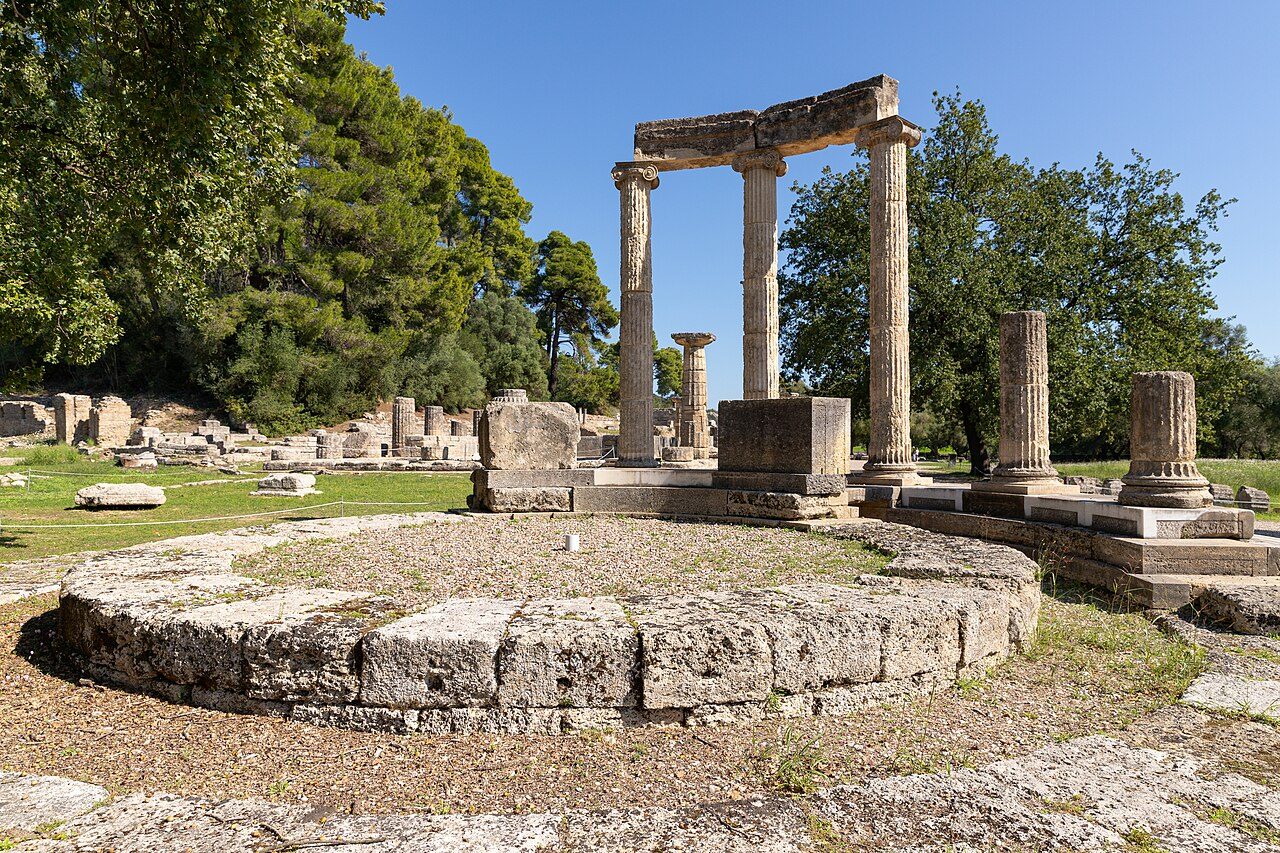
Tucked into the western Peloponnese, Olympia rests where the Kladeos River joins the Alpheios at the foot of pine-covered Mount Kronos. Walking through the sanctuary feels hushed and grounding, shaded by olive groves and Aleppo pines that temper the midday sun. The air carries scents of dry resin and wild thyme, with the rhythmic hum of cicadas echoing across tumbled limestone drums scattered through the grass. From 776 BC, when the first recorded Olympic festival took place, this sacred grove stood as the athletic and spiritual heart of the Greek world. At the archaeological site, a vaulted stone tunnel leads directly into the ancient stadium, where athletes once sprinted from starting blocks still visible in the clay. Nearby lie the giant collapsed columns of the fifth-century BC Temple of Zeus, while the colonnaded palaestra recalls daily wrestling practice. In the adjoining archaeological museum, visitors encounter Praxiteles' marble Hermes alongside the dynamic pediment sculptures depicting the chariot race of Pelops. The adjacent modern village centers on simple regional cooking, with family tavernas pouring local Roditis wine alongside dishes of rooster stewed in red sauce with hilopites pasta and oranges from the valley orchards. During the summer, the nearby outdoor theatre at Floka hosts open-air performances for the International Festival of Ancient Olympia. The sanctuary and town are easily explored on foot. Enter the gates right at opening time in the early morning, particularly in April or May, to experience the ruins surrounded by blooming wildflowers before the tour coaches arrive.
Read more