Ollantaytambo
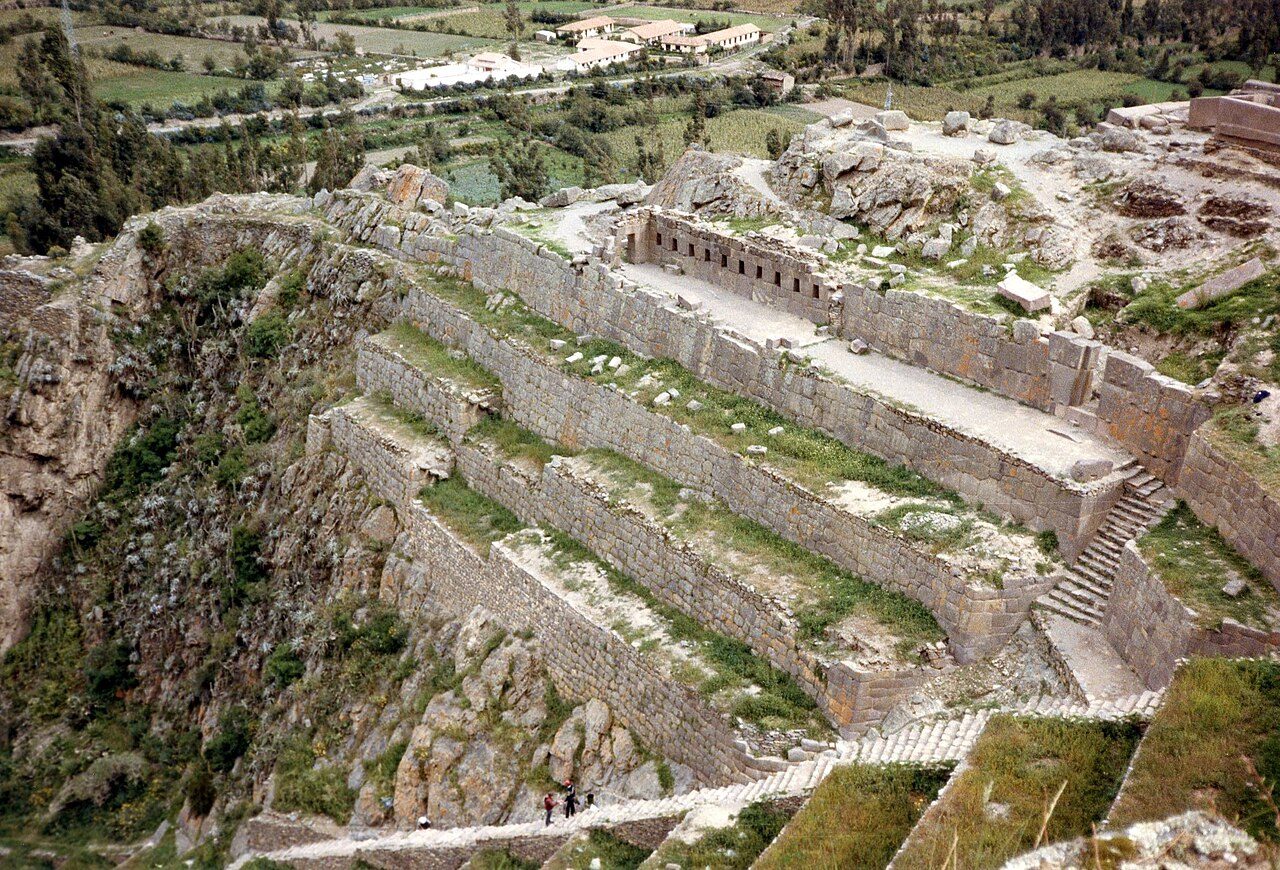
Tucked into the northern crook of the Sacred Valley, Ollantaytambo sits where the Patakancha River empties into the Urubamba beneath steep Andean peaks. Walking the town feels like stepping directly into the fifteenth century, as it retains the only original Inca street grid still inhabited today. Mountain runoff gurgles through open stone channels cut into the cobblestones, and villagers wearing red-and-black woven monteras pass beneath trapezoidal stone lintels that have stood for centuries. Emperor Pachacuti redeveloped the valley around 1440 as an imperial estate, and in 1537, Manco Inca famously held off Spanish forces here by flooding the valley plains below. The hillside is anchored by the ceremonial fortress, where steep agricultural terraces lead up to the unfinished Temple of the Sun and its massive rose-granite monoliths. Directly opposite on the sheer cliff face of Pinkuylluna, stone granaries catch cooling valley drafts to keep maize dry. Down below, the surviving canchas, four-sided residential compounds, still house families behind ancient shared courtyards. In the market stalls, vendors steam freshly harvested giant-kernel choclo paired with salty Andean cheese and ladle glasses of spiced chicha morada. Each year around Pentecost, the community celebrates the festival of Señor de Choquekillka with days of costumed dance troupes and brass bands filling the plaza. The entire town is easily explored on foot, and the best hours to wander the stone alleys are at dawn or after mid-afternoon, when train crowds clear out and the valley falls quiet.
Read more