Nesebar
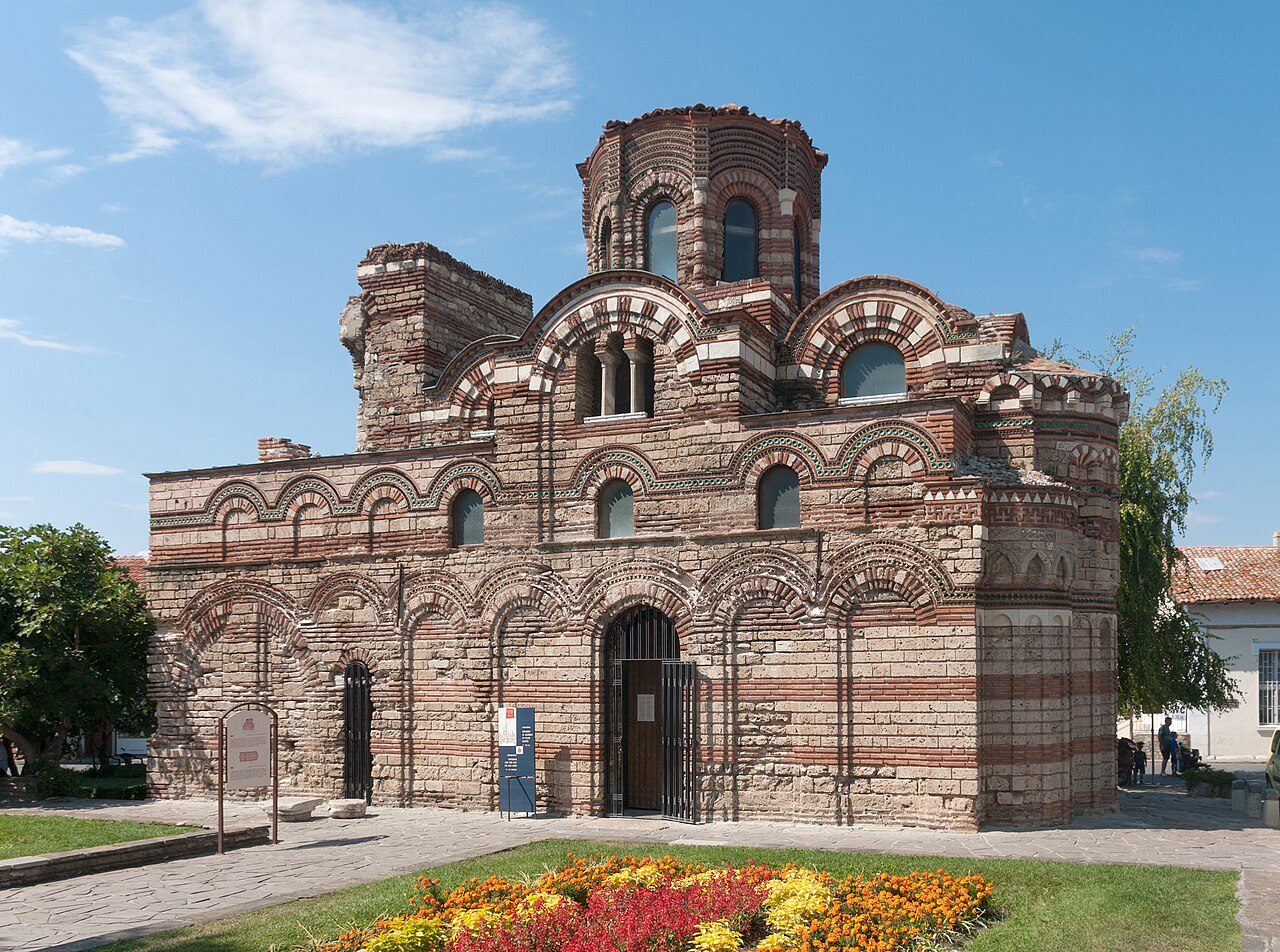
Anchored to Bulgaria's southern Black Sea coast by a narrow, wave-battered isthmus, Old Nesebar sits on a tear-shaped rocky peninsula. Salt air threads through an intricate maze of uneven cobblestone lanes, where overhanging upper stories of dark timber and white stone cast deep shadows over small artisan workshops. Walking here feels intimately tied to the rhythm of the water, as nearly every winding passage eventually opens onto views of the open sea or working fishing skiffs tied along the harbor wall. Settled by Thracians in the second millennium BC and reorganized as a Greek trading colony in 510 BC, the town preserves layers from millennia of maritime power. The fifth-century Church of Saint Sophia stands open to the sky, its ruined brick nave and surviving arches framing the horizon. A short walk down the lane, the fourteenth-century Church of Christ Pantocrator displays intricate glazed ceramic rosettes and bands of red brickwork characteristic of late Byzantine masonry. Near the connecting causeway, an antique wooden windmill stands above the shoreline, guarding the entry to quarters filled with preserved nineteenth-century maritime houses. Family-run tavernas along the cliff edge serve fresh Black Sea turbot, plates of salted sprats, and locally harvested green-fig preserves. Each August, the town swells with music, folk dances, and religious processions during the Feast of the Assumption, honoring its patron protector. The entire historic quarter is pedestrianized, making comfortable shoes essential for the polished stones. Visit in May or September, ideally during early morning, to experience the quiet lanes before tour buses arrive from nearby coastal hubs.
Read more