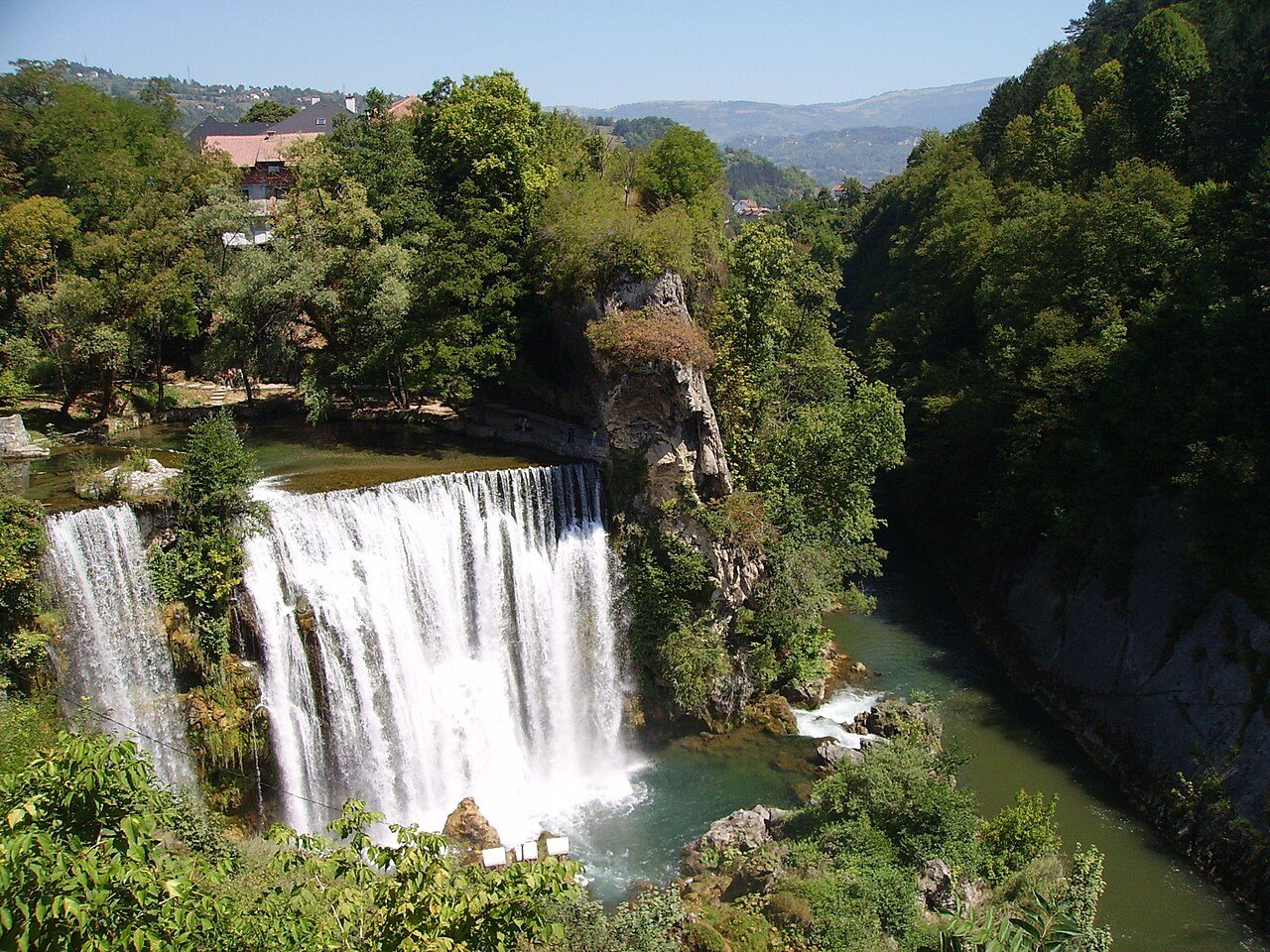
Jajce
Perched in the forested hills of Central Bosnia, Jajce sits directly over the confluence of the Pliva and Vrbas rivers. The town is built in vertical tiers, wrapping stone lanes around a limestone bluff where the roar of churning water mixes with cool mountain air. Wandering its steep cobbled alleys feels like navigating an intact medieval settlement, where Ottoman-era timber houses rest directly against older stone fortifications. Founded in the late fourteenth century by Grand Duke Hrvoje Vukčić Hrvatinić, Jajce served as the royal capital where Stjepan Tomašević was crowned the last king of Bosnia in 1461. An oval-shaped stone fortress crowns the crest, sheltering underground catacombs carved out as a crypt for Duke Hrvoje. Just below, the Romanesque belfry of Saint Luke marks where royal coronations unfolded. Right at the foot of the old center, the Pliva Waterfall drops over twenty meters into the Vrbas canyon, while a few kilometers upstream, a cluster of miniature sixteenth-century oak watermills still straddles the river rapids. Daily life settles along the water, where local taverns serve freshly caught Pliva river trout and bakeries roll out crisp spinach pita. In August, crowds gather on the canyon rim to watch divers leap into the foaming waterfall pool during the annual high-diving competition. The old core is compact and entirely pedestrian, so sturdy shoes are all you need. Arrive in late spring when the snowmelt makes the falls thunder at their fullest, and climb the fortress ramparts in the morning light before the midday heat settles over the valley.
Read more