
Ica
Set in the sun-baked coastal desert of southern Peru along the Ica River, Ica rests wedged between barren Andean foothills and vast sand plains. Walking through the grid-like center reveals a dry, industrious warmth, where the steady hum of blue mototaxis fills the air and palms shade busy avenues. Just beyond the urban core, the arid landscape gives way to green corridors of vineyards and pecan groves irrigated by deep valley wells. Spanish conquistador Jeronimo Luis de Cabrera founded the town in 1563. Though a severe earthquake reshaped the area in 2007, historical identity remains strong. The central Plaza de Armas anchors daily life beneath manicured ficus trees. A short drive south stands the rebuilt Santuario del Senor de Luren, a modernist stone sanctuary housing a sixteenth-century wooden Christ that survived multiple tremors. Nearby, the Museo Regional Adolfo Bermudez Jenkins displays ancient trepanned skulls and Paracas textiles, while Tacama, one of the oldest operating vineyards in South America, maintains an active seventeenth-century hacienda and working pisco distillery. Daily sustenance revolves around the crowded Mercado Modelo, known for creamy pallares stew and tejas, which are local confections of pecans and dulce de leche coated in sugar glaze. In March, the city fills with music during the Festival Internacional de la Vendimia to celebrate the grape harvest. To navigate the desert sun, plan outdoor visits for early morning or dusk, and rely on the inexpensive mototaxis that run between the central plaza and surrounding neighborhoods.
Read more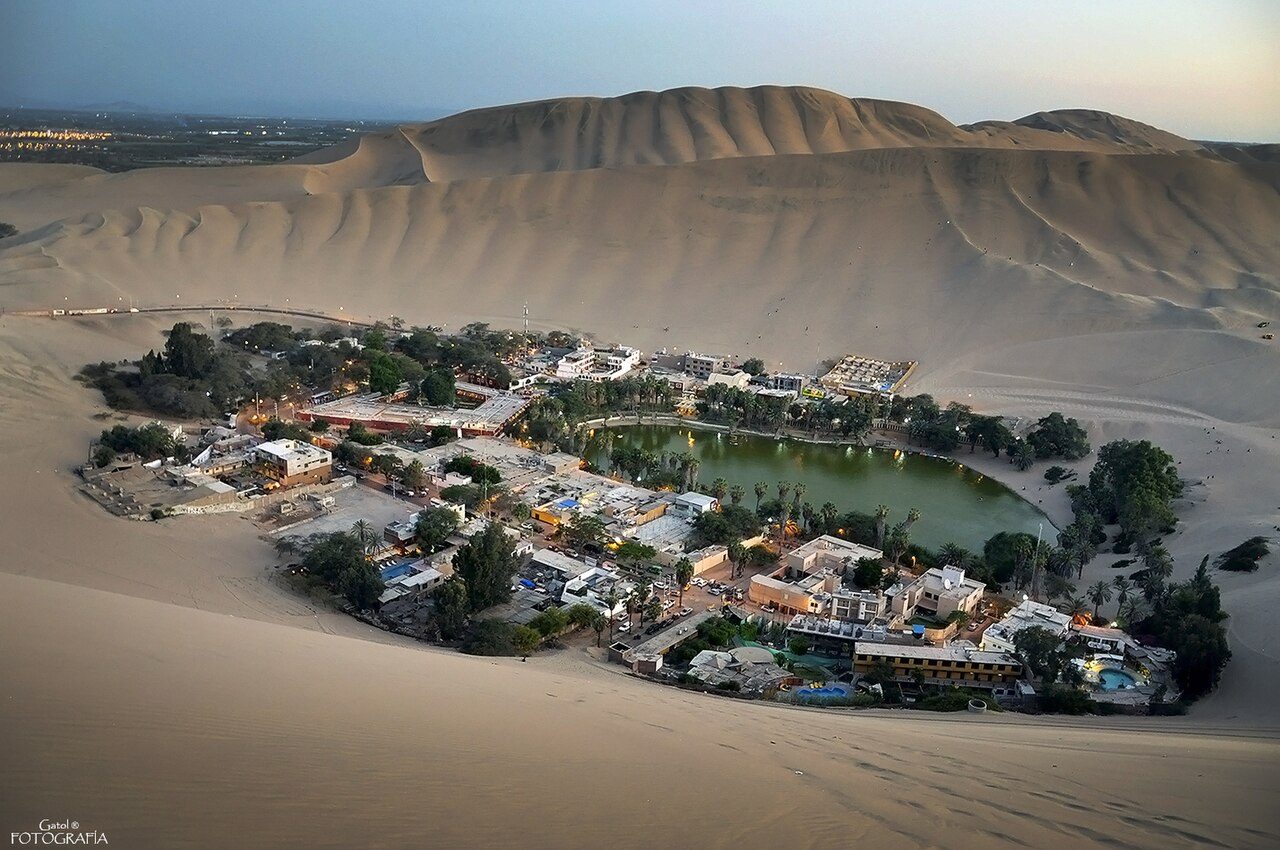
What to see in Ica
Photo credits (1)
- Gatol fotografia from La Paz, Bolivia, CC BY-SA 2.0, via Wikimedia Commons