Hvar
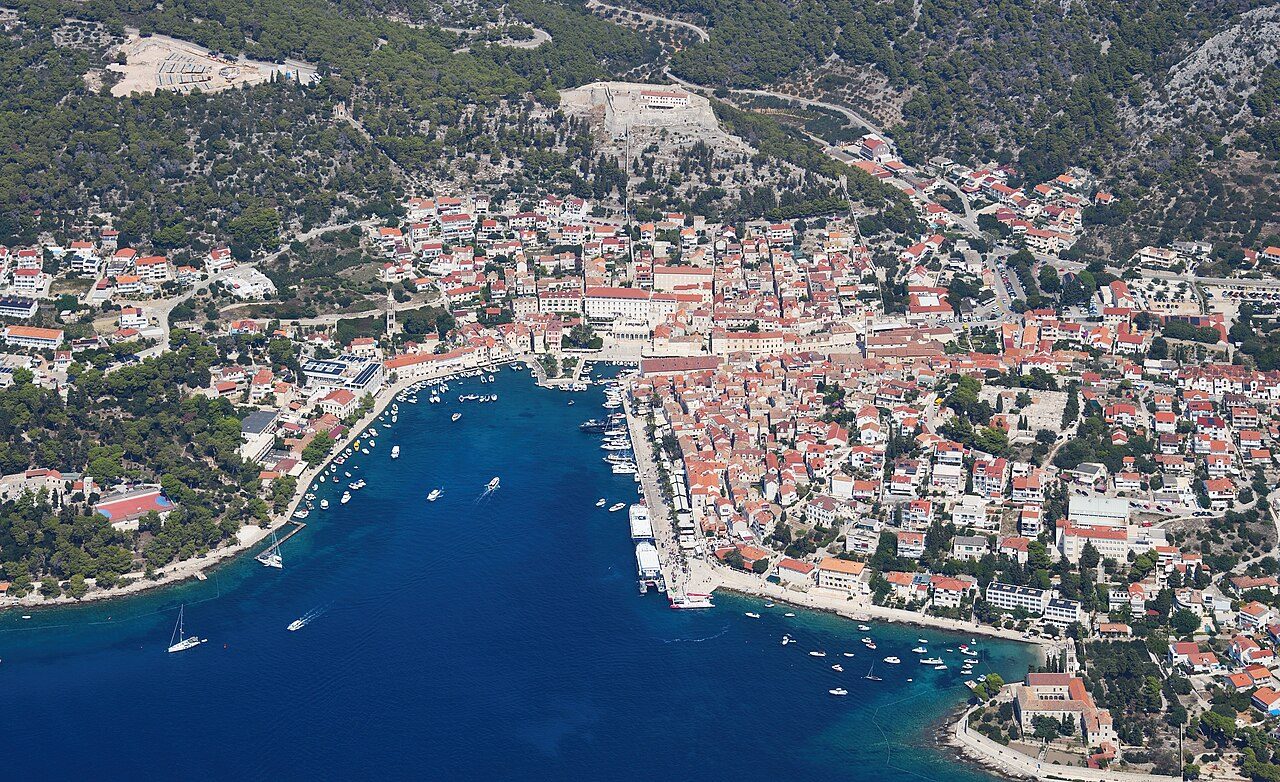
Anchored along the central Dalmatian coast, Hvar Town hugs a sheltered Adriatic bay beneath limestone ridges scented with wild rosemary and pine. Stepping onto the slick, pale flagstones of the waterfront reveals a pedestrian labyrinth where narrow stone stairways climb between Gothic-Renaissance palaces, laundry-strung balconies, and quiet courtyard gardens. The town took shape largely under Venetian rule from 1420 to 1797. At the water edge stands the massive stone Arsenal, which sheltered naval galleys before opening one of Europe’s first municipal theaters on its upper floor in 1612. It faces the expansive Pjaca, anchored by the baroque facade and four-tier bell tower of St. Stephen’s Cathedral. Up on the pine-covered hillside looms the sixteenth-century Fortica, a stone citadel built to protect residents from Ottoman raids, while the fifteenth-century Franciscan Monastery hugs a peaceful southern cove with a centuries-old cypress tree in its cloister garden. Daily life revolves around the open-air morning market by the harbor and plates of gregada, a fishermen stew simmered with white rockfish, onions, potatoes, and island olive oil. In July, inland hamlets celebrate the traditional lavender harvest, pressing oil in iron stills. The historic core is strictly walkable, best explored in May, June, or September when sea temperatures are warm and summer crowds thin out; to reach outer coves or the nearby Pakleni islets, travelers rely on wooden water taxis or small rented skiffs.
Read more