Heraklion
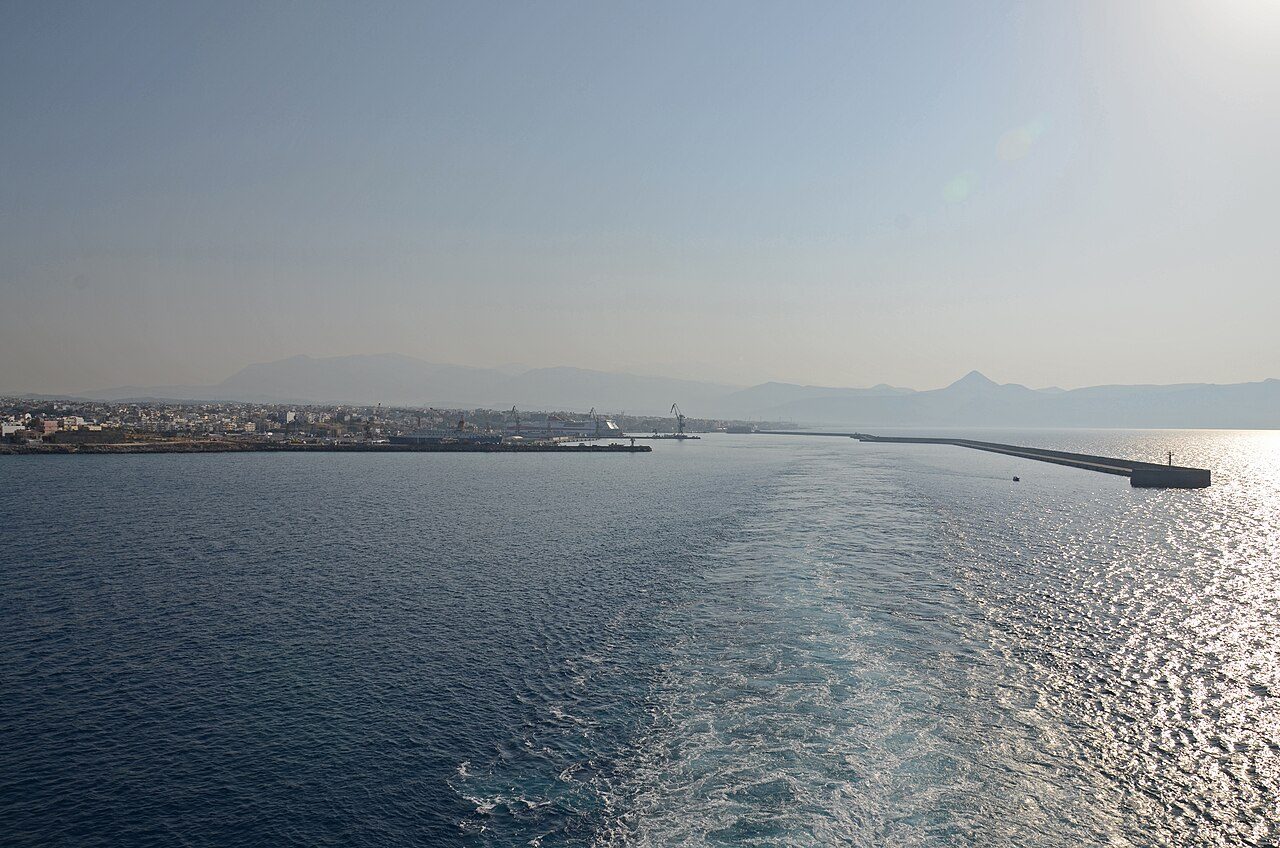
Heraklion sprawls across the central northern coast of Crete, fronting the Cretan Sea beneath the southern silhouette of Mount Juktas. On foot, the city feels raw and alive, trading postcard serenity for an authentic urban pulse. Motor scooters buzz past Neoclassical townhouses, the aroma of warm bakeries blends with salty sea spray, and modern concrete apartment blocks open suddenly onto sunlit pedestrian flagstones flanked by medieval ramparts. Arab conquerors founded the city as Chandax in 824, but Venice left the deepest architectural imprint during a four-century reign that ended with the Ottoman siege of 1669. Massive sixteenth-century bastions still encircle the old core, terminating at Koules Fortress, which guards the harbor breakwater with stone reliefs of the Lion of Saint Mark. In the center, locals congregate around the carved beasts of the 1628 Morosini Fountain, while the nearby Heraklion Archaeological Museum displays original Minoan frescoes and the enigmatic Phaistos Disc. Five kilometers south stand the Bronze Age ruins of Knossos, the political heart of Europe's earliest advanced civilization. Mornings belong to pedestrian 1866 Street, where market stalls overflow with sheep milk graviera cheese, wild mountain sage, and local snails. Around dusk, join the evening stroll along 25th of August Street before stopping at a traditional kafenio for chilled tsikoudia pomace brandy paired with rusks and pickled bulbs. Visit during May or October to escape scorching summer temperatures. The historic center is compact enough to navigate entirely on foot, while blue urban buses run frequently from the port directly to Knossos.
Read more