Delphi
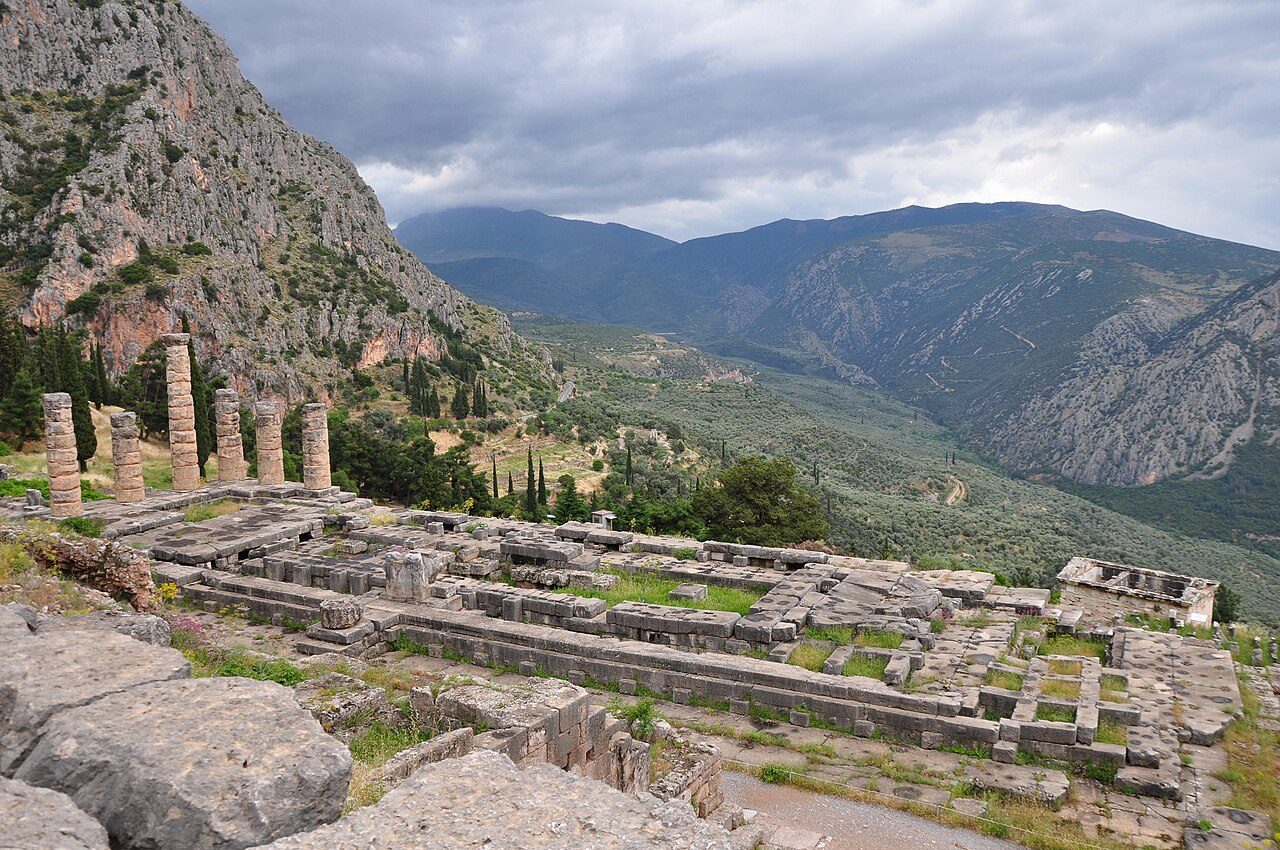
Delphi clings to the southwestern slopes of Mount Parnassus in Central Greece, overlooking a vast basin of olive groves in the Pleistos Valley toward the Gulf of Corinth. Walking the terraced streets of the modern settlement and the adjacent hillside ruins feels intimate and vertical, filled with mountain wind whistling off the sheer Phaedriades cliffs and the dry scent of wild thyme. Revered from the eighth century BC as the navel of the earth, Delphi drew rulers from across the Mediterranean seeking prophecy from the oracle Pythia. The Sacred Way zigzags past the reconstructed Treasury of the Athenians, raised after the Battle of Marathon in 490 BC, up to the commanding limestone columns of the Temple of Apollo. Further up the slope, an ancient theater overlooks the gorge, while down the road stands the circular Tholos at the Sanctuary of Athena Pronaia. Inside the adjacent Delphi Archaeological Museum, the life-sized bronze Charioteer from 478 BC remains remarkably preserved with glass-paste eyes intact. In the modern village, family tavernas serve spit-roasted lamb, local cheeses, and wrinkled Amfissa olives harvested from the plains below. Cultural life peaks in summer when the European Cultural Centre of Delphi hosts classical drama and symposiums in open-air amphitheatres. Visit during spring or autumn to avoid the summer heat, and enter the archaeological park at eight in the morning to explore the mountain terraces on foot before tour coaches arrive from Athens.
Read more