Cuenca
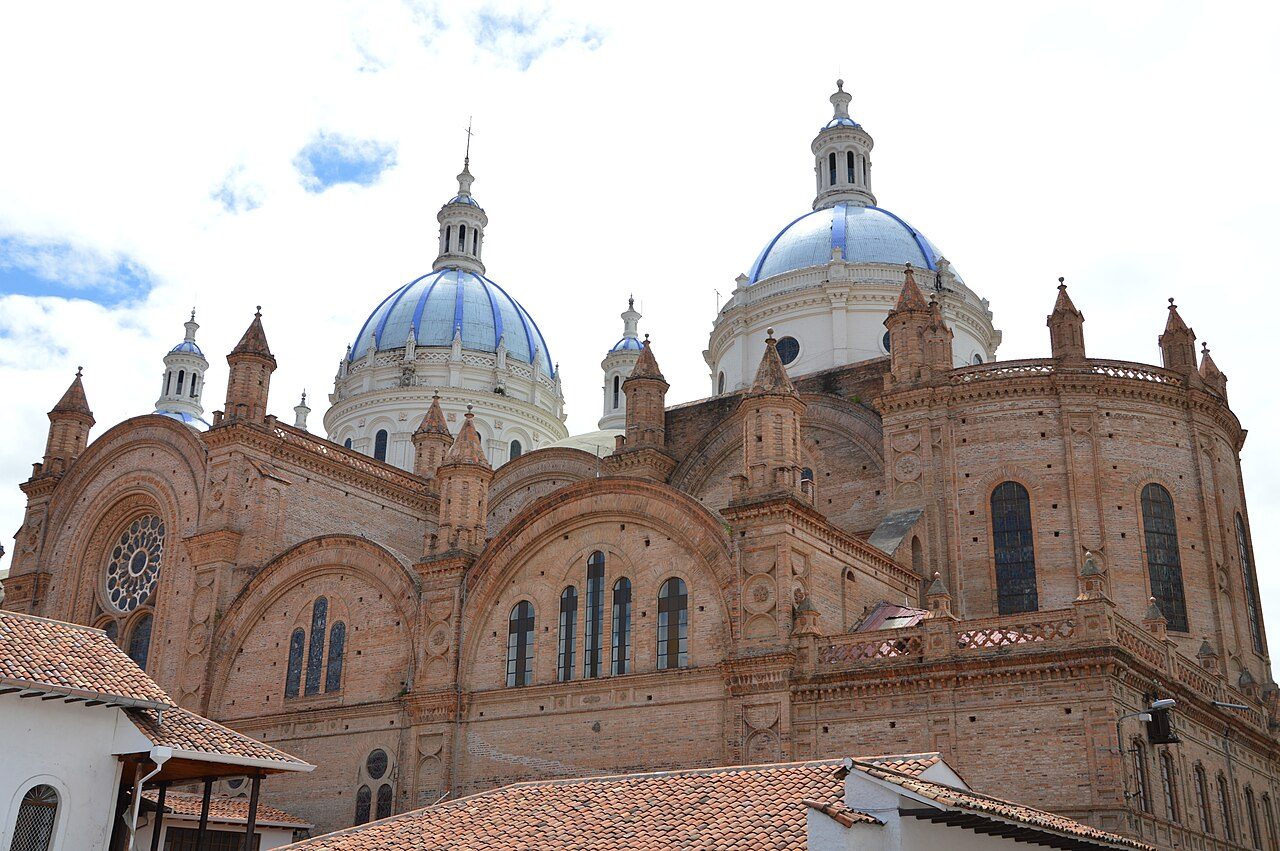
Cuenca sits at 2,560 meters in a southern Andean valley traversed by four rushing rivers, most notably the Rio Tomebamba. Walking its historic grid feels measured and intimate, shaped by polished cobblestones, flowering wrought-iron balconies, and the constant murmur of mountain runoff tumbling over river stones below red-tiled colonial rooftops. Established in 1557 by Spanish governor Gil Ramirez Davalos over the ruins of the Inca city of Tomebamba, the center preserves layers of distinct eras. At Parque Calderon rises the New Cathedral, recognizable by its trio of sky-blue domes crafted from Czech tiles. South of the main square, the Barranco district features historic multi-story houses clinging to the riverbank cliff. A short walk west leads to the quiet plaza of San Sebastian, anchored by a modern art museum, while the eastern edge holds the terraced Inca foundations of Pumapungo. Daily rhythm centers on Mercado Diez de Agosto, where vendors carve crisp-skinned roast pork, known as hornado, alongside stalls offering indigenous herbal cleansings. Each December twenty-fourth, the city fills with the Pase del Nino Viajero, an all-day procession of costumed children and decorated floats honoring the Christ Child. Clear mornings offer the crispest mountain light before afternoon rains, and travelers can easily navigate the compact historic center on foot or via the quiet electric tram line.
Read more