
Copacabana
Tucked into a crescent bay on the southern shores of Lake Titicaca at 3,800 meters elevation, Copacabana blends the crisp air of the Bolivian Altiplano with the rhythm of a lakeside harbor. Strolling down Avenida 6 de Agosto toward the pebble shore, travelers pass Aymara weavers selling alpaca woolens, boat captains arranging crossings to Isla del Sol, and the smell of fried fish drifting from corrugated-tin kiosks. Long before the Spanish established the town in the 16th century, this peninsula was a sacred Inca transit point. In the main plaza stands the 17th-century Basilica of Our Lady of Copacabana, finished in 1619 with Moorish-style domes and Portuguese blue tiles. Above town lies the Horca del Inca, a pre-Inca astronomical observatory carved into sandstone crags. To the north, pilgrims ascend the stone steps of Cerro Calvario, passing fourteen crosses to reach summit viewpoints where traditional yatiris burn incense for good fortune. Lakeside dining centers on fresh trucha from the cold water, served with mote corn and fiery llajwa salsa. Outside the sanctuary, you might catch the Bendición de Movilidades, an enduring local custom where drivers adorn vehicles with flower garlands and douse them with beer and holy water to secure safe journeys. The town is compact enough to navigate entirely on foot. Visit between May and October during the dry Andean winter, and start uphill walks in the late afternoon to catch the sunset over the water.
Read more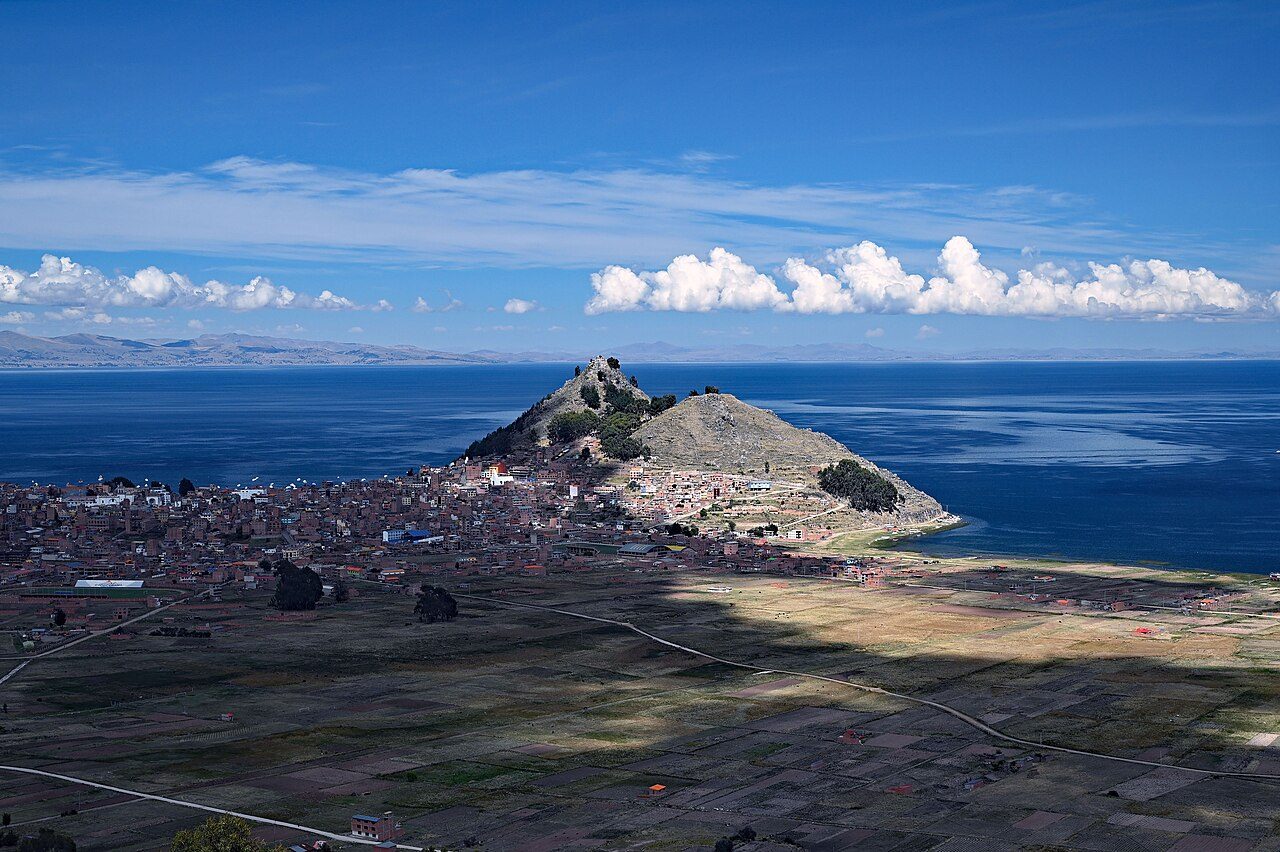
What to see in Copacabana
Photo credits (2)
- P. Hughes, CC BY 4.0, via Wikimedia Commons
- Alexson Scheppa Peisino(AlexSP), Public domain, via Wikimedia Commons