Chichicastenango
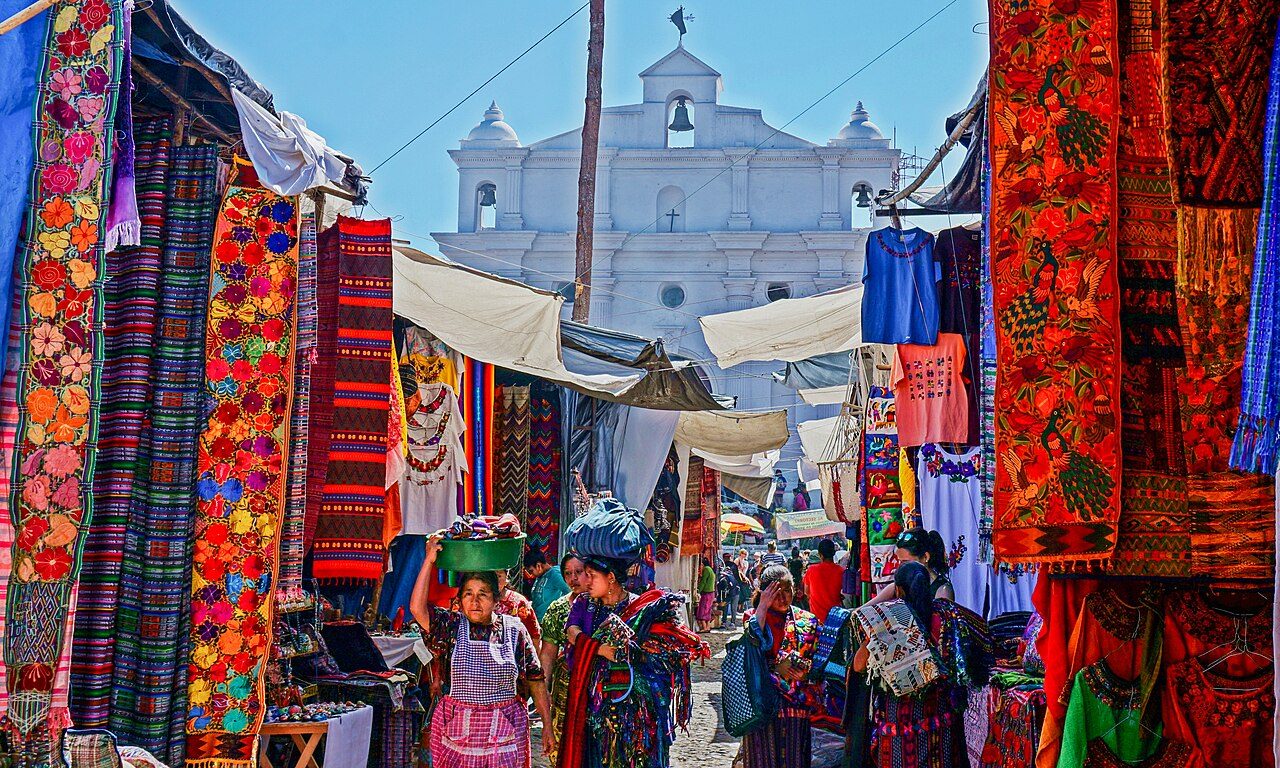
Perched at 2,000 meters in the rugged highlands of El Quiché, Chichicastenango rests among pine-clad ridges and steep ravines. Walking its cobblestone streets, you are enveloped by the scent of burning copal incense, pine needles strewn across floors, and woodsmoke drifting from clay hearths. The town remains a vital spiritual center for the K'iche' Maya. Settled after the Spanish destroyed the K'iche' capital of Q'umarkaj in 1524, the town gained historical renown when Friar Francisco Ximénez transcribed the sacred Popol Vuh manuscript here in 1701. Religious life anchors at the whitewashed Church of Santo Tomás, built around 1540 over a pre-Columbian platform whose eighteen stone steps represent the Maya solar calendar. Across the plaza stands the Chapel of Calvario, while a trail climbs through pine woods to Pascual Abaj, a stone idol where shamans conduct fire offerings. Nearby, the hillside municipal cemetery stands out with hundreds of family tombs painted in turquoise, yellow, and scarlet. Life centers on the open-air market held every Thursday and Sunday, when traders fill the plaza with handwoven textiles, carved wooden masks, and fresh corn tortillas. Every December, the town celebrates the Fiesta de Santo Tomás with the dizzying Palo Volador pole-flying ceremony. The central grid is steep but entirely walkable; arrive the evening before market day to wander the stalls at sunrise before regional buses arrive.
Read more