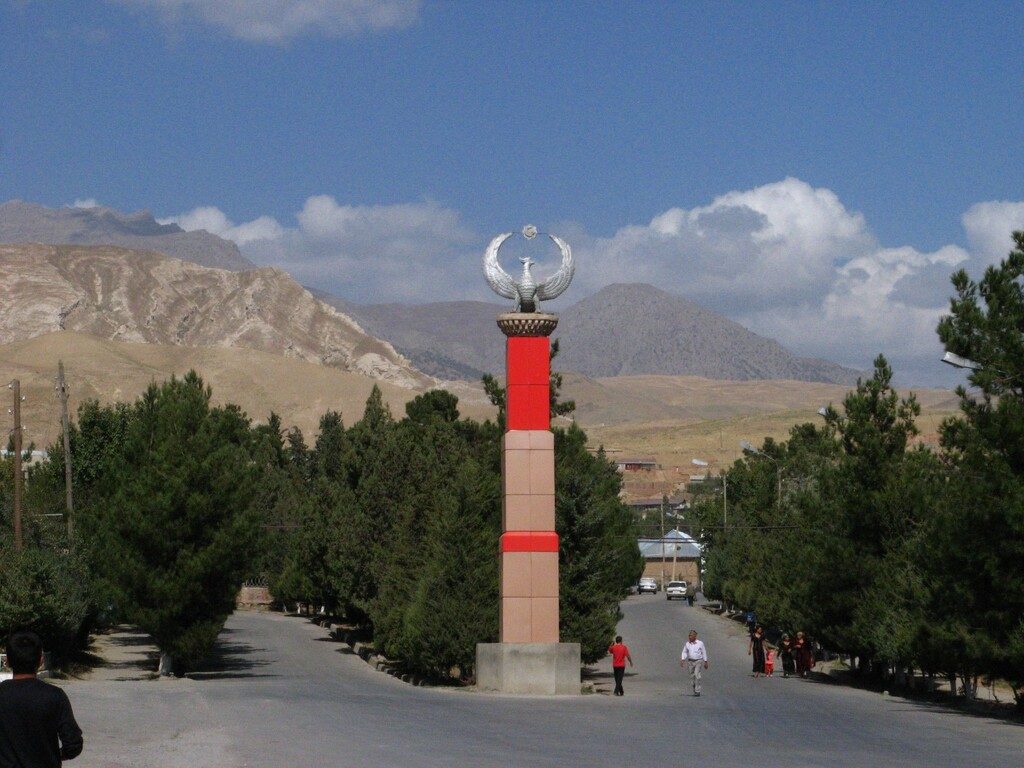
Boysun
Tucked into the rugged limestone folds of the Gissar Range in southern Surxondaryo Region, Boysun feels separated from the rest of Uzbekistan by time and geography. Walking through the town reveals quiet lanes flanked by mud-brick compounds, walnut trees fed by mountain runoff, and open views of red-clay canyons. The altitude keeps the air crisp, and the rhythm of life remains tied closely to livestock herding and small terraced orchards. Human settlement here reaches deep into prehistory; Soviet archaeologists uncovered the skeletal remains of a Neanderthal child at nearby Teshik-Tash cave in 1938. Outside town, the sulfurous waters of Omonkhona spring draw regional pilgrims seeking remedies for liver ailments, set inside a steep gorge carved by mountain torrents. Travelers can also hike between the sandstone walls of Kaptarhona canyon, historically used as a natural refuge, or visit the nearby settlement of Sayrob to stand beneath two hollow plane trees that have stood for nearly a thousand years. Boysun holds UNESCO-recognized status for its preserved folklore, showcased during the Boysun Bahori festival each spring when pastoral songs, Shamanic-rooted rituals, and felt-making crafts fill the mountain pastures. At the central dehqon market, traders sell geometric suzani embroideries alongside portions of tandir kabob, mutton slow-roasted inside sealed clay ovens over juniper wood. Visit in April or May, when the foothills bloom green, and hire a local driver with a high-clearance car from Termez to negotiate the unpaved mountain roads.
Read more