Bonito
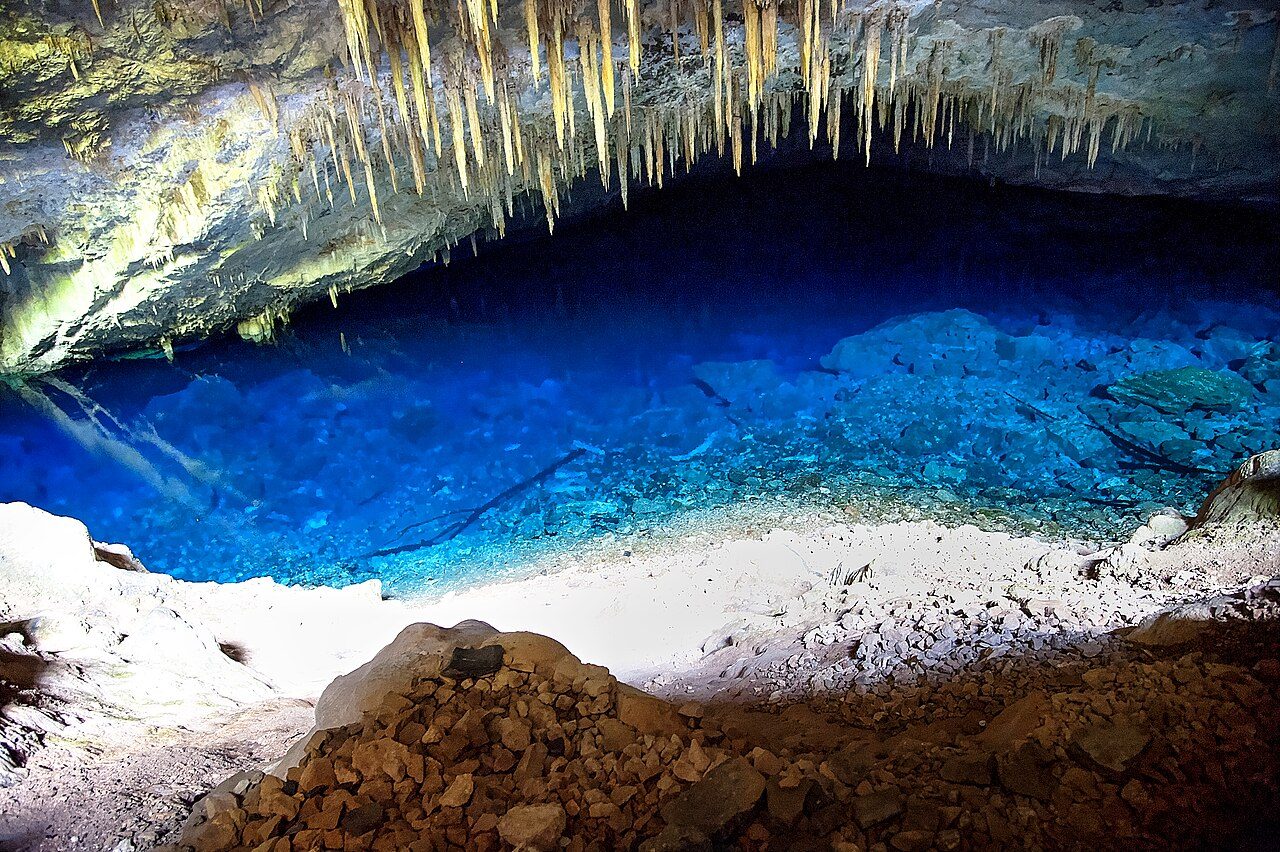
Bonito sits on the limestone edges of the Serra da Bodoquena plateau in Mato Grosso do Sul. The urban center is an unpretentious, low-rise grid centered on Praça da Liberdade, where streetlights illuminate fountains sculpted like native piraputanga fish. Strolling the main avenue, Rua Coronel Pilad Rebuá, travelers and local ranchers cross paths against a calm backdrop of red-earth dust and open-air diners. The town grew from Fazenda Rincão Bonito, founded by Luiz da Costa Leite Falcão in 1869, before becoming an autonomous municipality in 1948. The primary draws lie in the surrounding karst country. Gruta do Lago Azul descends past prehistoric fossils to a cavern pool of vivid cobalt blue. At Rio da Prata, subterranean filtration produces water so clear that swimmers drift alongside golden dorado without disturbing the riverbed. Nearby, Abismo Anhumas offers a vertical descent into a flooded chamber of massive stalagmites, while Buraco das Araras is a vast sandstone sinkhole noisy with nesting red-and-green macaws. Local tables feature grilled river pacu, farmed caiman fillets, and sips of Taboa, a regional cachaça blended with honey and cinnamon. In November, residents celebrate the Festa da Guavira to mark the harvest of a tart savanna fruit. Because the fragile environment is regulated through a digital voucher system with strict daily visitor limits, all tours must be booked beforehand through registered agencies. Renting a car or booking shared transfers is necessary, as the reserves lie on private ranches scattered far outside town.
Read more