
Banaue
Perched high in the Cordillera Central mountains of Northern Luzon, Banaue clings to steep ravines carved by the Alimit River. Walking the town center means navigating narrow concrete paths where stilted houses hug the cliffs and mountain fog rolls in swiftly. The air carries the sharp scent of damp earth, roasting coffee beans, and diesel exhaust from sputtering three-wheeled tricycles. Hand-hewn by the indigenous Ifugao people across two millennia, the irrigated terraces reflect an ancient hydraulic system built without draft animals. In the town proper, the Banaue Museum preserves tribal woodcarvings and early ethnographic photographs gathered by anthropologist Otley Beyer. Outside town, a steep stone trail descends into Batad, an amphitheater of stone-walled terraces that culminates at Tappiya Falls. Nearby, the quieter village of Bangaan retains clustered thatch-roof huts centered around a traditional stone drying yard. At the roadside public market, stalls offer dark tinawon heirloom rice, mountain honey, and bowls of pinikpikan, a smoky chicken broth seasoned with cured pork. Every two years in April, Banaue celebrates the Imbayah Festival, marked by traditional gong music and high-speed races on hand-carved wooden scooters. Visit between March and May for clearing skies and bright green rice shoots before harvest. To reach outlying trailheads, hire a local tricycle driver at the town terminal, or arrange a high-clearance jeepney for rough dirt roads.
Read more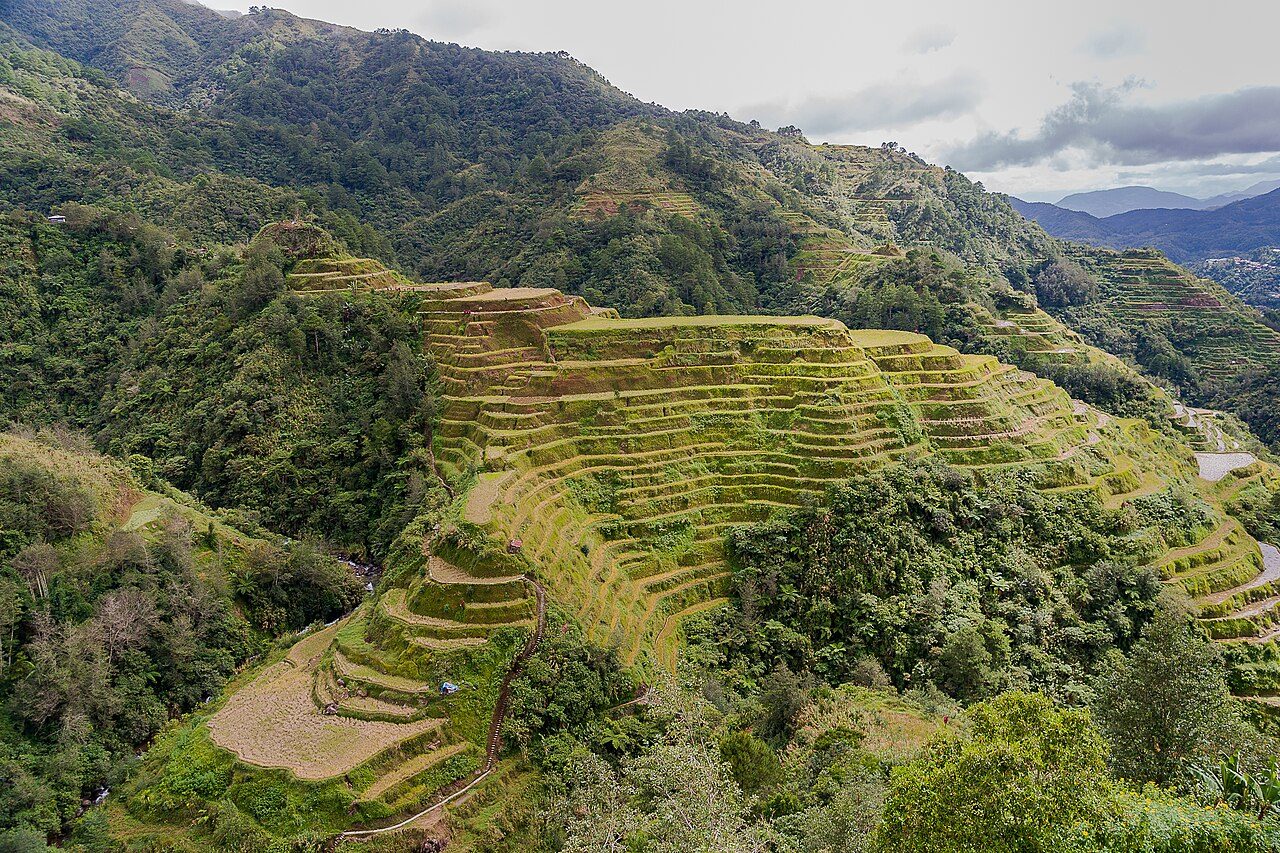
What to see in Banaue
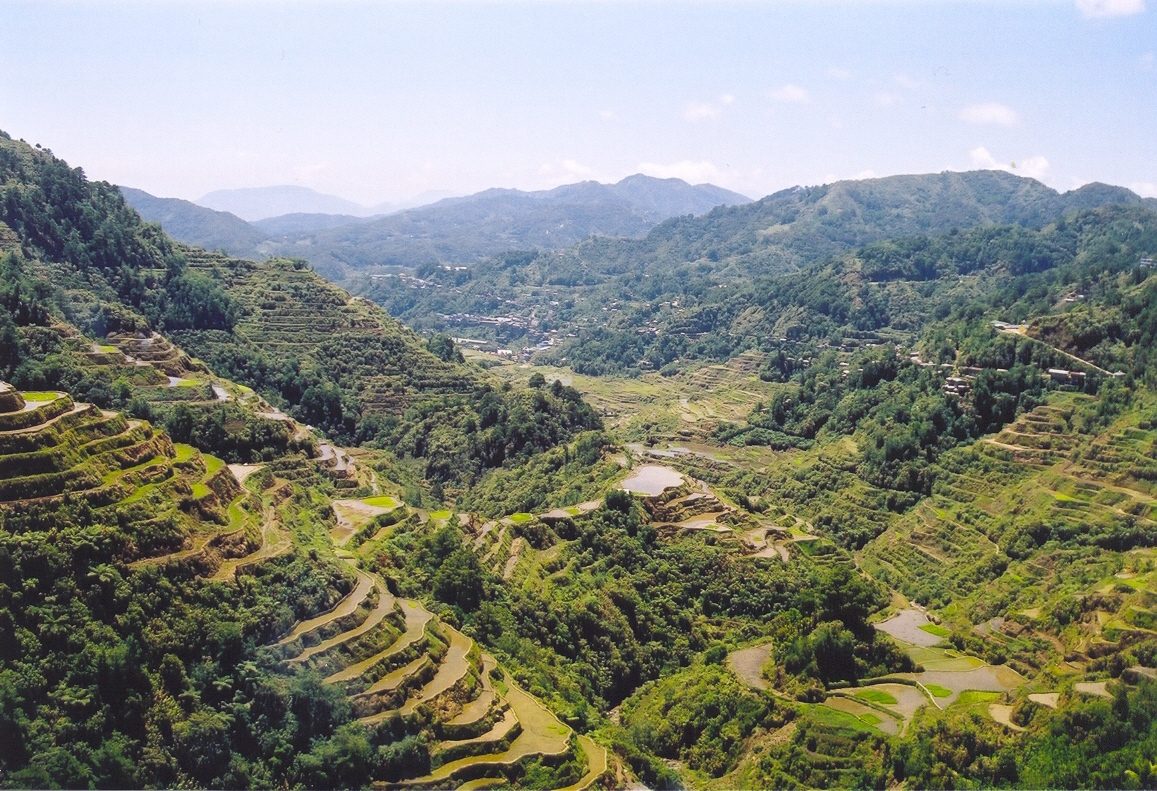
Photo credits (2)
- CEphoto, Uwe Aranas, CC BY-SA 3.0, via Wikimedia Commons
- Magalhães, Public domain, via Wikimedia Commons